
Last Updated:
Stumps are the part of clearing that decides what the ground can be used for next. Homestead Land Clearing offers stump grinding and removal for land clearing across Frisco and nearby Collin and Denton County, from a single stump left after a tree came down to dozens of stumps across a lot or a building pad, with the work done by licensed and insured contractors. The two methods do different jobs. Grinding turns the stump into chips below the surface so the ground can be mowed, planted or seeded. Extraction lifts the stump and its root ball out so nothing is left to rot under concrete or fill. Picking the wrong one either wastes money or leaves a problem buried for the builder to find.
What happens on the first visit
The first visit counts the stumps and decides which method each one needs. These are the planned steps.
- Walk the property. Boundaries, every stump and its rough diameter, what will be built over, slopes, wet spots, fences, and what is buried or overhead.
- Check the rules for that address. Utility locates through Texas811, plus the City’s tree removal permit where trees are still standing. In Frisco the City locates its own lines separately for permitted work.
- Write the scope. Method, finish level, stumps, debris plan and erosion control, in writing, before a price.
- Clear and hand off. The ground is left at the agreed finish, ready for seeding or the next trade.
Grinding vs extraction
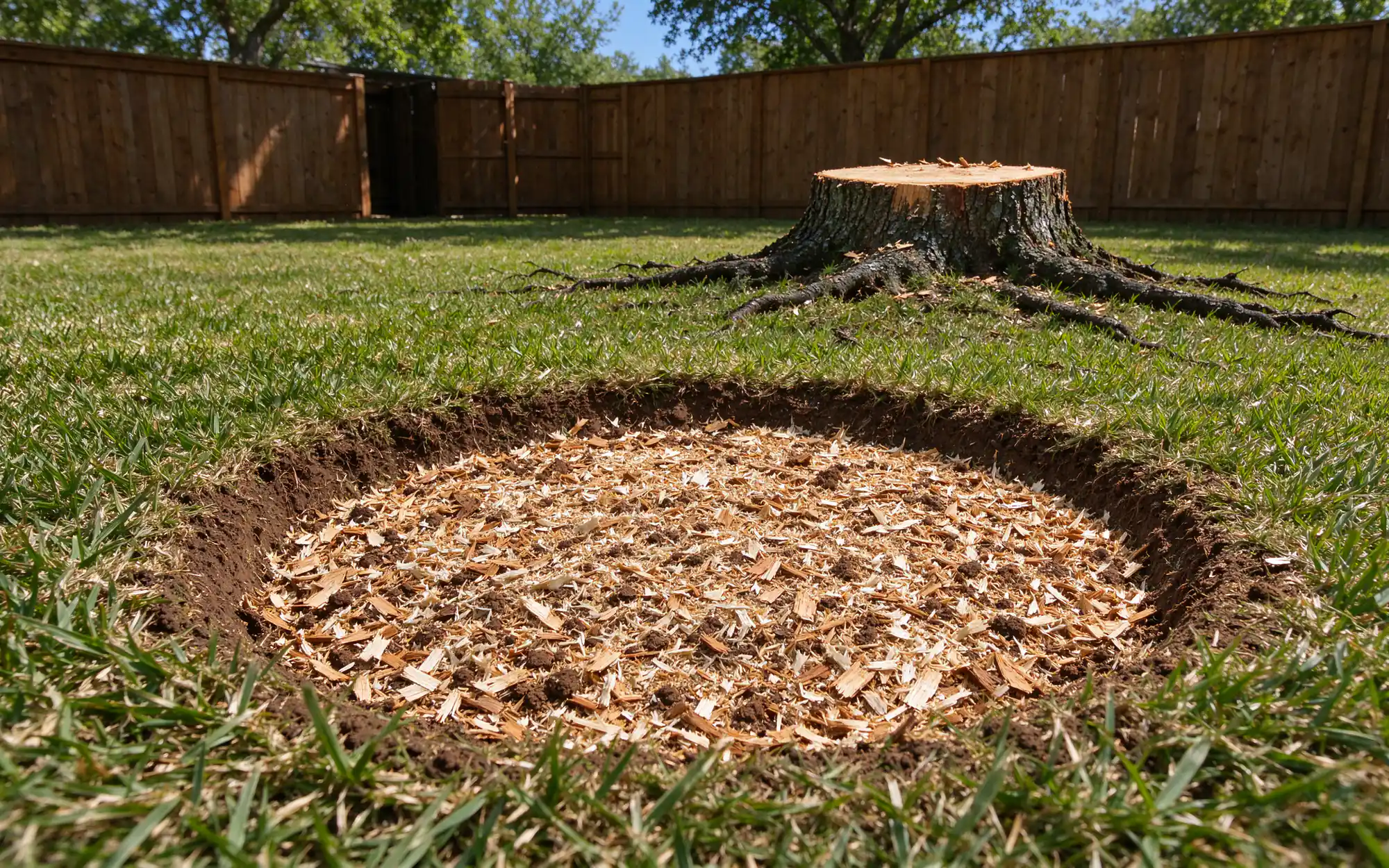
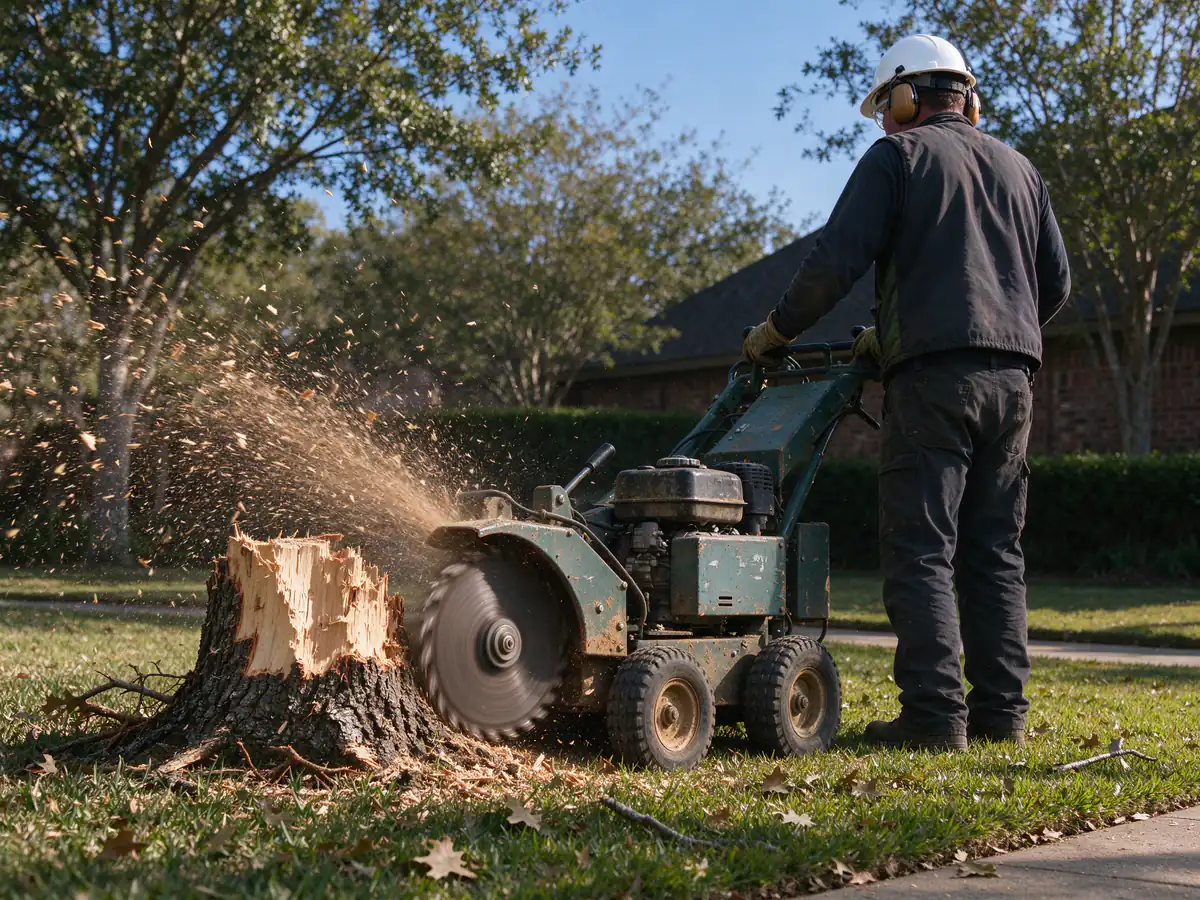
A stump grinder is a spinning wheel of carbide teeth that the operator sweeps back and forth across the stump, chewing it into chips a little deeper with each pass. Small walk-behind units fit through a yard gate; larger tracked and tow-behind machines handle big stumps and lots with many of them. Grinding goes below grade to a depth that should be written down, and the operator can chase the larger surface roots that radiate out across a lawn. What it does not do is remove the root system. Lateral roots and the wood under the grinding depth stay in the soil and decay over time. The full comparison is in stump grinding vs stump removal.
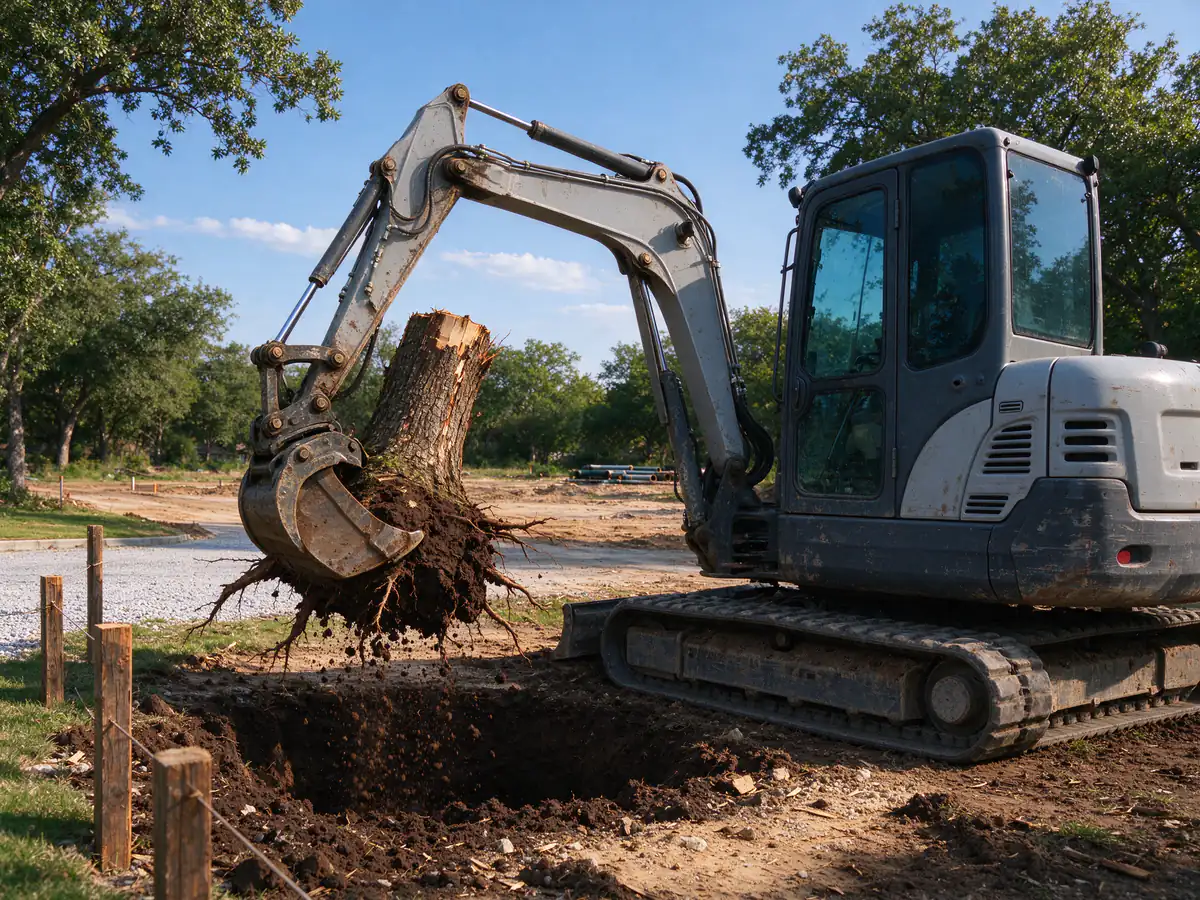
Extraction uses an excavator, or a loader on smaller stumps, to dig around the stump, cut or break the main roots and lift the whole root ball out. On a lot being cleared for a house, this is usually part of grubbing: stumps and roots come out of the slab and driveway footprint because buried wood rots, leaves voids and lets concrete or fill settle. That is the core reason builders specify it, and clearing and grubbing covers how the work is spelled out on larger sites.
The rule of thumb: what will sit on that spot later decides the method. Lawn and beds, grind. Slab, drive, patio or fill, extract. Back woods or pasture nobody mows, a cut flush near the ground may be enough, and forestry mulching often handles that kind of ground; see forestry mulching.
From a single stump to a full lot
Single stumps are part of the approved scope. The common case is a tree a tree service took down last year, leaving a stump in the middle of the yard or along the fence. Taking down standing trees close to a house, which needs climbing and rigging, is arborist work and a separate trade; the stump afterward is not.
Several stumps across a yard or acreage change the job from one machine visit to a plan: which stumps get ground, which surface roots get chased, and where the chips go. A pasture with old mesquite or hackberry stumps is a common example. Grinding those keeps mowers and shredders safe, but Texas A&M AgriLife notes that mesquite resprouts from a belowground bud bank, so a shallow grind on mesquite often brings back new stems.
Lots and building pads are where extraction takes over. A cleared residential lot can have dozens of stumps, some in the footprint, some in the yard. Extracting only the footprint stumps and grinding the rest is a common way to hold cost down while still giving the builder clean ground. The lot clearing page and the guide to clearing land to build a house cover how the footprint is set.
Root balls, backfill and settling
An extracted stump leaves a hole bigger than most people expect, because the root ball carries a lot of soil with it. Root balls are heavy and awkward to haul, and Frisco lists stumps and shrubs with root balls as unacceptable for curbside yard waste, directing them to the 121 Regional Disposal Facility in Melissa. North Texas Municipal Water District charges $52 per ton there, with a one-ton minimum. Shaking soil off the root ball before loading reduces the weight.
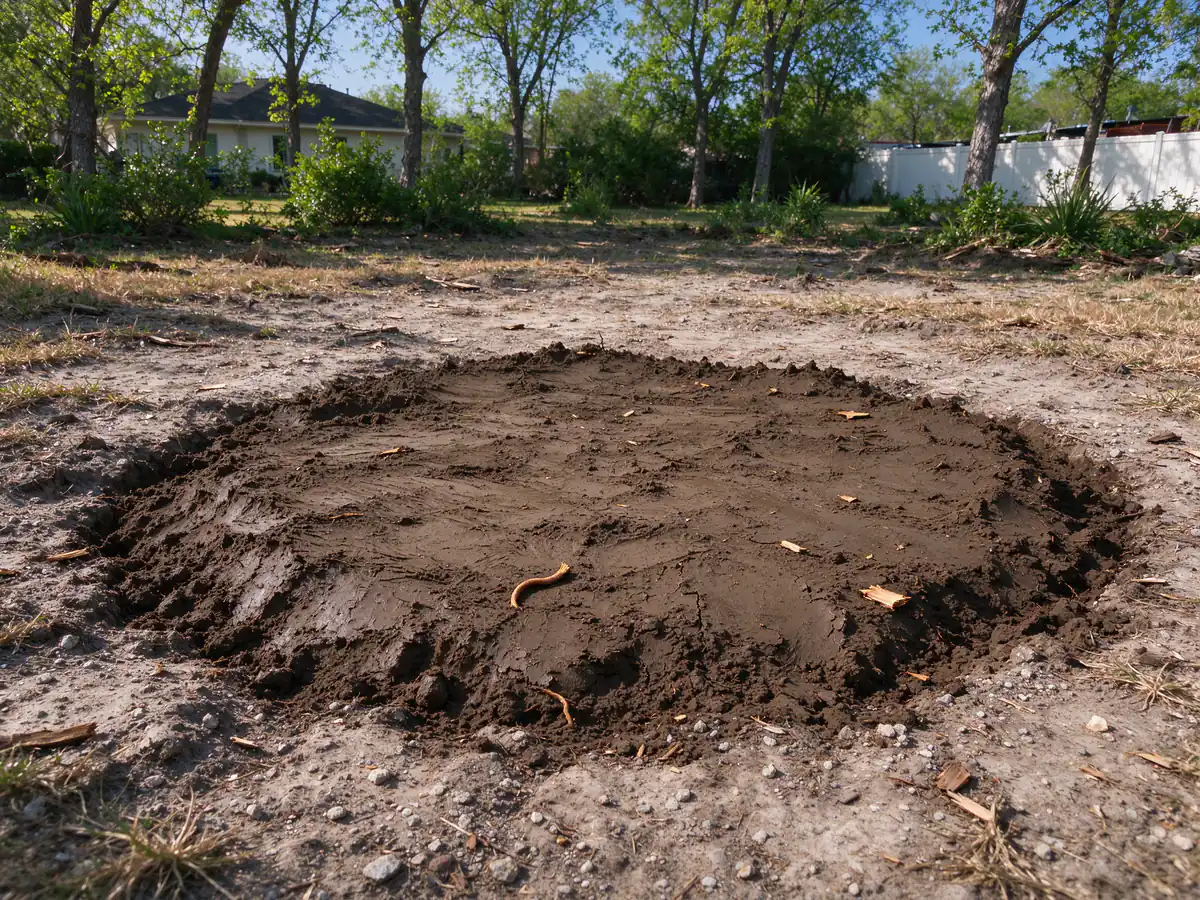
Holes from extraction need filling. On a building pad, compaction is handled by the excavation or grading contractor, a separate trade, and the scope should say where clearing stops and their work starts; clearing vs grubbing explains that line. In a yard, fill is placed and tamped so the hole is safe and roughly level, and bare patches can be seeded; erosion control after land clearing covers keeping soil in place.
Ground stumps settle too. The chips that go back into the hole decay, and the soil drops with them. Raking out most of the grindings, filling with soil and topping up after a few rains keeps the dip small. On Frisco’s Houston Black and Austin clays, which shrink and swell with moisture, a filled hole can move again after the first wet and dry cycle.
Utilities and the 16-inch rule
Stump work is digging, legally speaking. Texas Utilities Code Chapter 251 defines excavation as using mechanized equipment to disturb soil 16 inches or deeper, and requires notice to Texas811 at least 48 hours before the work, excluding weekends and holidays. Stump grinding below grade and extraction both commonly reach that depth. Texas811 warns that water, sewer and similar facilities may not receive the notice, and the City of Frisco locates its own lines separately and does not locate on private property. Sprinkler lines, a feed to a barn, or a septic line are on the owner to point out. Stumps under or near power lines need more care: Oncor says to stay, and keep equipment and materials, at least 10 feet from overhead high-voltage lines. The guide to clearing near utilities and power lines covers the coordination.
What stump grinding and removal cost
For grinding, HomeGuide’s national budgeting figures are $120 to $400 for the first stump and $30 to $60 for each additional one, or $2 to $6 per inch of diameter (HomeGuide, national). Those are planning ranges, not company rates.
Stump extraction has no reliable published price for this area, so it is priced from the site. What drives it:
- Diameter and species. A large oak or pecan carries a wide root plate that takes longer to dig around and lift.
- Number of stumps. Moving an excavator to the site is a fixed cost, so many stumps spread it out.
- Access. A narrow gate or a yard between houses limits the machine size.
- Soil. Wet clay grips roots and is slow to dig (see clearing wet clay ground); dry clay can be hard as brick.
- Hole filling. Fill soil and placement add cost.
- Disposal. Root balls are heavy, and they are paid for by the ton.
The land clearing cost per acre guide shows how stump work fits into a full clearing budget, and land clearing debris removal covers hauling.
What's included
- A walk of the property to count and measure stumps, mark what will be built over, and note sprinklers, fences and anything buried or overhead
- A check of the rules for that address, including Texas811 locates and City permit status where trees are still standing
- A written scope that says which stumps are ground, which are extracted, how deep, and where the grindings and root balls go
- Grinding of stumps and major surface roots below grade, from a single yard stump to a full lot
- Extraction of stumps and root balls with an excavator or loader where the area will carry a slab, drive or fill
- Raking out grindings or hauling them off, as the scope states
- Filling extraction holes so the area is safe and level enough for the next step
- Seeding as an add-on where bare soil is left
Stump grinding vs stump extraction vs leaving cut stumps
| Grinding below grade | Extraction with root ball | Cut flush and left | |
|---|---|---|---|
| What comes out | The stump and top of the root crown, turned into chips | The whole stump and main root ball, lifted out | Nothing below the saw cut |
| What stays in the ground | Lateral roots and wood below the grinding depth | Small broken roots and some soil organics | The entire stump and root system |
| Ground disturbance | A shallow hole of chips and soil | A large hole and heaved soil that must be filled | None |
| Best fit | Lawns, beds, pasture and yards that stay as yard | House pads, driveways, fill areas and lots for a builder | Woods and back acreage where nobody mows |
| Debris | Grindings raked in, used as mulch or hauled | Stumps and root balls hauled to a facility that accepts them | None |
Related resources
- Decision GuideStump grinding vs stump removal: which one do you need?
- LearnHow do you clear land to build a house?
- Decision GuideWhat is the difference between clearing and grubbing?
- LearnHow do you clear land safely near power lines and buried utilities?
- Cost GuideHow much does land clearing cost per acre in North Texas?
Representative photos of this work
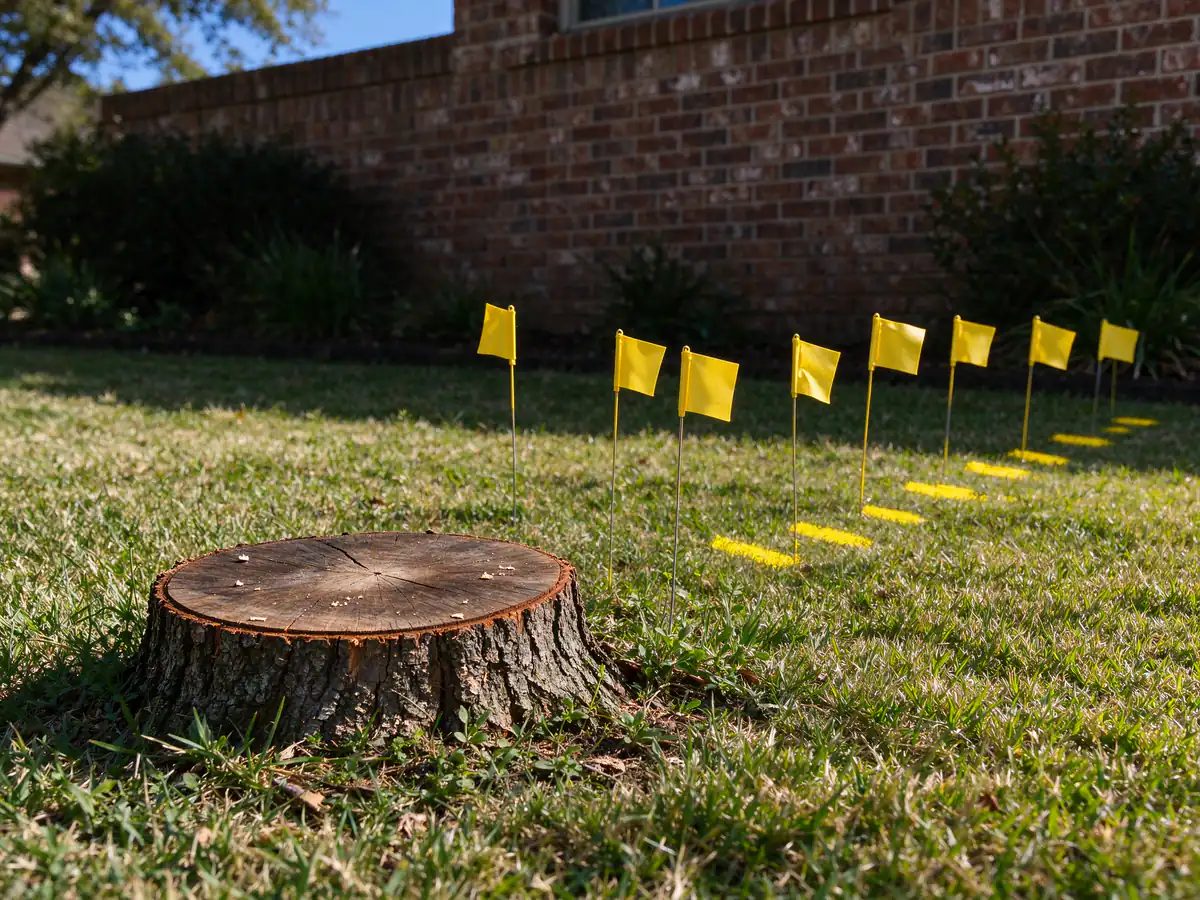
Representative photos of this type of work, not photos of specific completed jobs.