
Last Updated:
Land clearing debris removal is the part of a clearing job that decides where everything goes once it is cut: limbs, brush, logs, stumps and whatever else turns up. Homestead Land Clearing offers debris removal across Frisco and nearby Collin and Denton County communities, either as part of a clearing scope or on its own after a storm or a DIY project, with the work done by licensed and insured contractors. There are four basic choices: chip it, mulch it in place, haul it off, or burn it. Around Frisco the rules narrow those choices quickly, and disposal can be one of the largest lines on a small job, so the debris plan belongs in the written scope from the start.
What happens on the first visit
Debris is easier to plan than to improvise. The planned process runs in four steps.
- Walk the property. Boundaries, the trees you want to keep, slopes, wet spots and fences, what is buried or overhead, and how much material there is. The walk also checks where a dump truck or roll-off can sit without rutting the lot or blocking the street.
- Check the rules for that address. Tree permit timing, burn options (often none), creek or floodplain limits, who may place a container, and utility locates through Texas811. In Frisco the City locates its own lines separately for permitted work.
- Write the scope. Method, finish level, stumps, debris plan and erosion control, all in writing, before a price.
- Clear and hand off. The site is left at the agreed finish, with debris gone or processed as written.
Chip, mulch in place, haul or burn
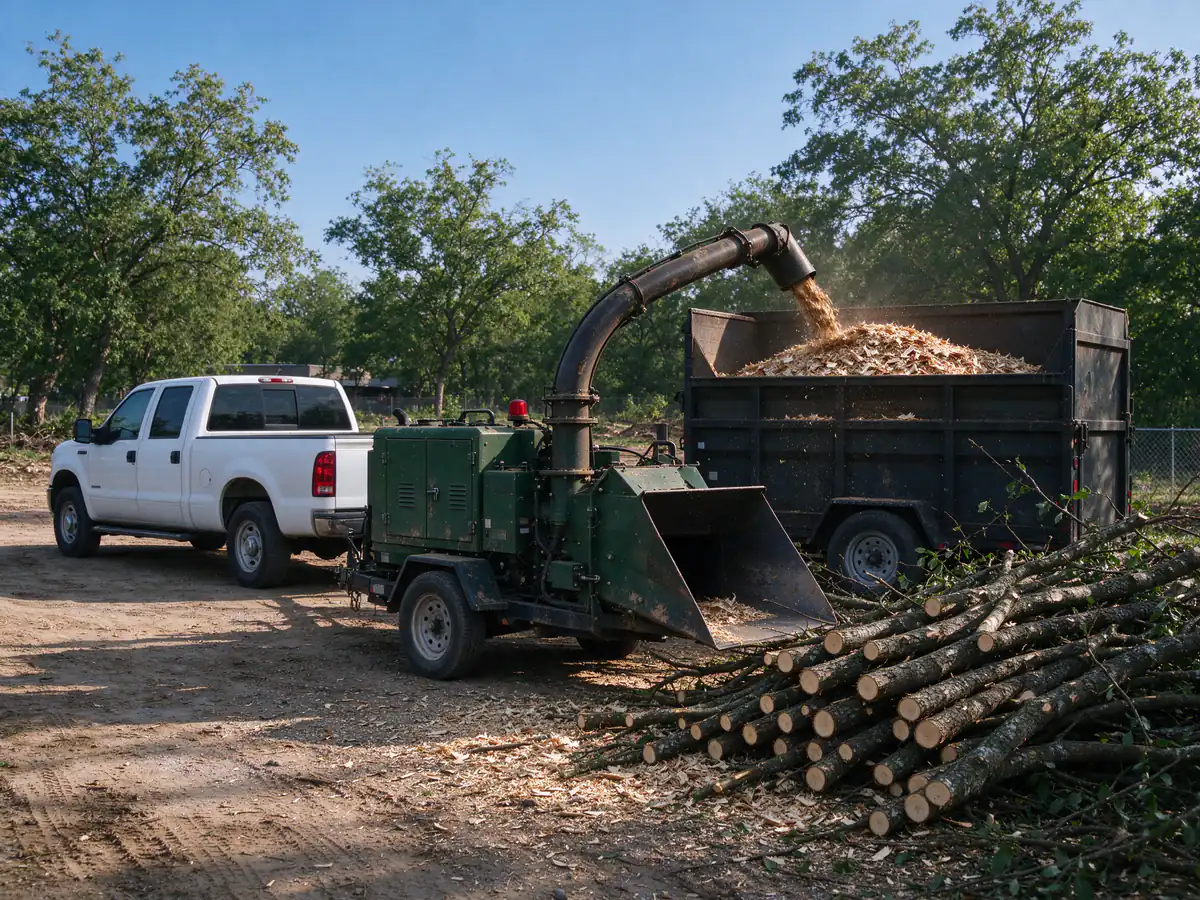
Chipping feeds limbs and brush through a wood chipper, which turns a bulky pile into a fraction of its loose volume. Chips can be spread on paths, under keeper trees or in beds, or loaded out. Chippers have a size limit, so large logs and root balls go another way.
Mulching in place uses a forestry mulcher to grind brush and saplings where they stand. Nothing has to be loaded or hauled, which makes it the cheapest debris plan on ground that will stay open. It is the wrong choice under a future slab, driveway or fill, because mulch and the roots below it decay and settle. The page on forestry mulching explains where it fits.
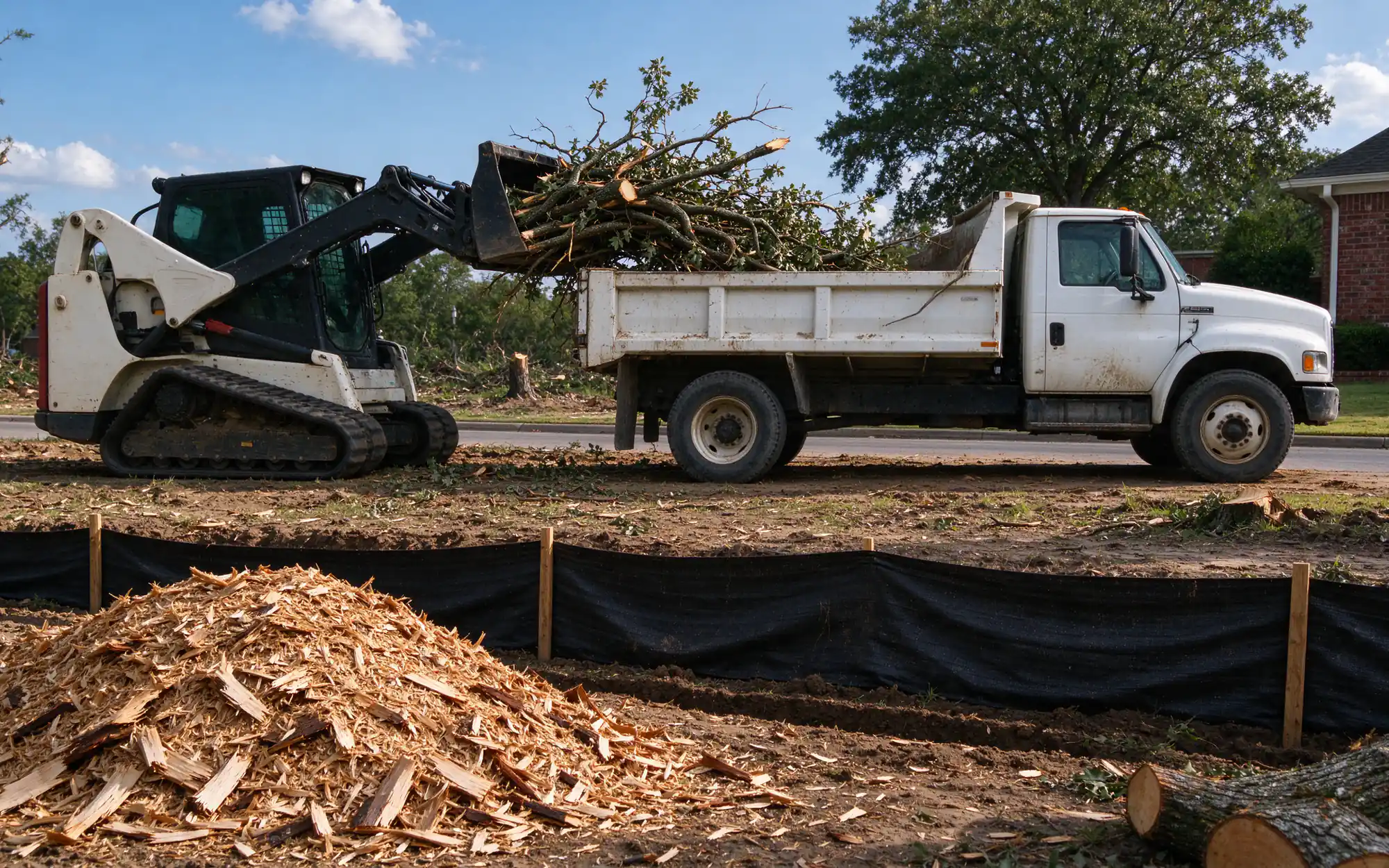
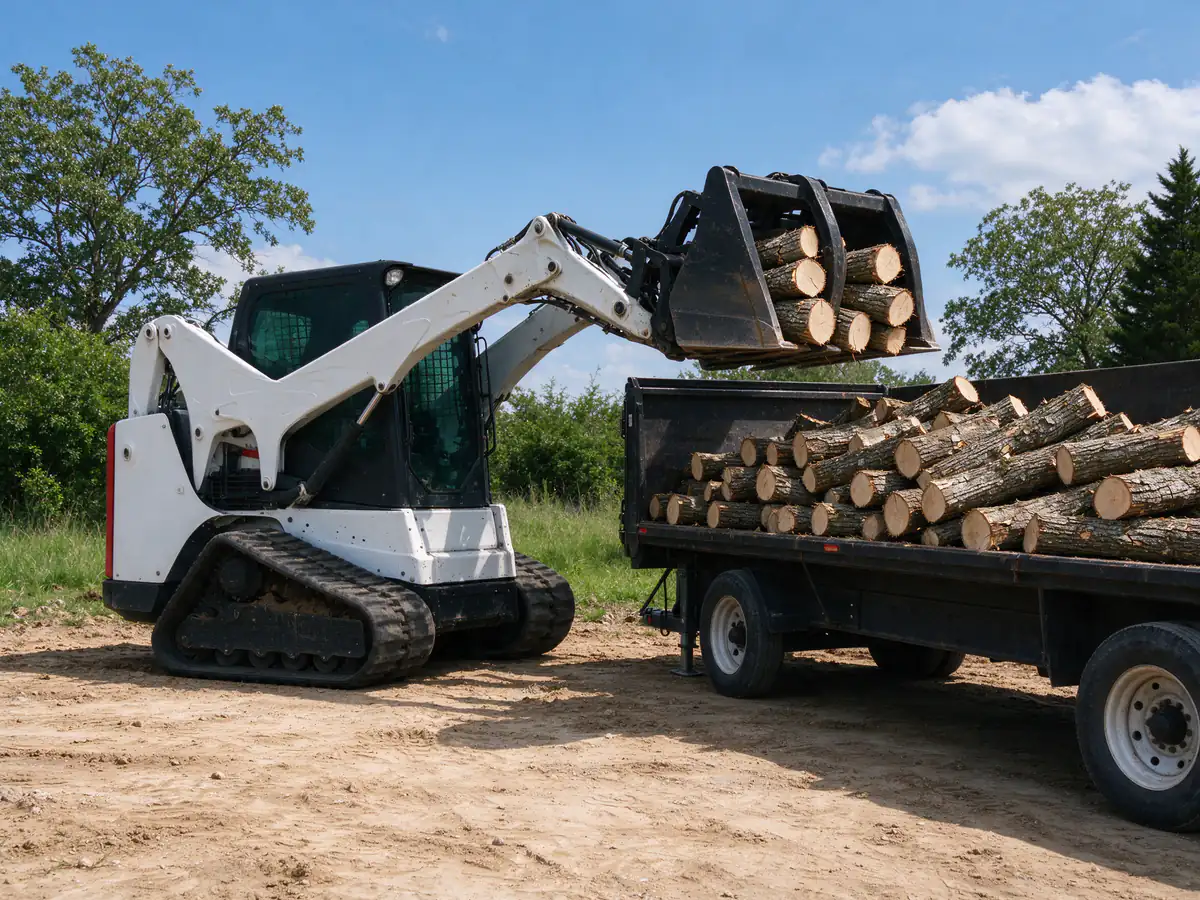
Hauling off starts with grapple equipment. A grapple bucket on a skid steer or loader grabs tangled brush, logs and stumps that a standard bucket cannot hold, and loads them into a dump truck or container. Haul-off is the usual plan for building footprints, for logs and the stumps left by stump grinding and removal, and for any site where the owner wants nothing left behind. Its cost is trucking plus tipping fees, and both grow with volume.
Burning looks like the cheapest option and is the hardest one to use here. Collin and Denton counties are in the Dallas-Fort Worth ozone nonattainment area, where TCEQ rules allow on-site burning of land-clearing debris only when no practical alternative exists, with conditions that include staying at least 300 feet from neighboring occupied structures, burning in daylight, and wind between 6 and 23 mph. Frisco Fire issues burn permits only to the landowner and requires the burn site to be 300 feet from structures. Counties also impose temporary burn bans by Commissioners Court order during dry spells, and those come and go. The guide to burning brush in Collin and Denton County covers the rules town by town.
Where the debris goes and what it costs
Disposal rates around Frisco are published, which makes this one of the more predictable parts of a clearing budget.
| Destination | What it takes | Published rate |
|---|---|---|
| City of Plano Custer Road yard-waste facility | Brush and limbs; no dirt, fencing, treated wood or trash | $22 per cubic yard, $66 minimum (City of Plano) |
| NTMWD transfer stations | General loads; never construction or remodeling debris | $80 per ton, one-ton minimum (North Texas Municipal Water District) |
| NTMWD 121 Regional Disposal Facility, Melissa | Landfill, including construction debris | $52 per ton, one-ton minimum (North Texas Municipal Water District) |
Green waste and other debris go to different places, which is why sorting on site matters. Brush and limbs tip by the cubic yard at a yard-waste site, so chipping before hauling can lower the tipping cost. Old fencing, lumber and other non-green material must go to the 121 landfill, which charges by the ton. A mixed load can end up at the more expensive destination, or be turned away. The guide on what a land clearing quote should include shows how a debris line should read.
Inside Frisco city limits, only the City’s contracted hauler may place a roll-off container. The City of Frisco lists construction roll-offs at $357.95 per haul plus disposal by the ton, $108.87 for delivery, $4.47 per day and a $1,000 deposit. For larger clearing jobs, debris usually leaves in dump trucks instead, which avoids a container sitting on the lot. These are budgeting figures, not company rates. The land clearing cost per acre guide and the land clearing cost estimator put them in context.
Frisco’s 72-hour rule and the tree permit
Where Frisco’s tree ordinance applies, trees that are cut must be chipped and used as mulch on site or hauled off within 72 hours of cutting. That one rule shapes the schedule. Felling, chipping and trucking have to run together, which means the debris plan has to be settled, and the trucks or chipper booked, before the first tree comes down.
The ordinance covers tree removal across the City except on single-family and two-family lots within a plat of record, and it also requires an approved tree survey and permit before clearing starts. The Frisco tree removal permit guide explains who needs one. Separately, the City says leaving cut trees on a property or in the street is a code violation, whether or not a permit was involved.
Storm debris
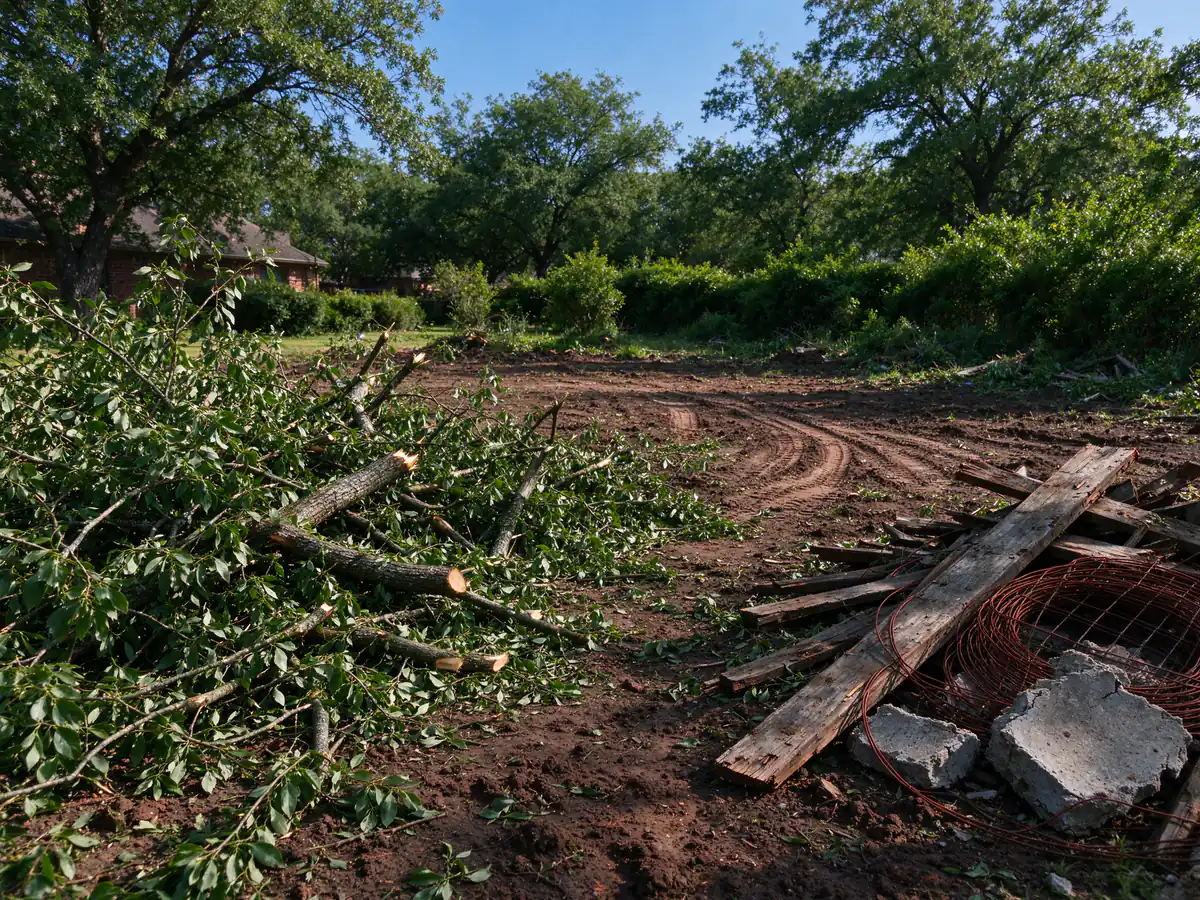
A storm can drop a whole tree or a pile of heavy limbs onto a lot in an afternoon. Frisco’s weekly curbside yard-waste collection is not built for that: it takes up to 10 bags or bundles, with limbs cut to 3 feet, tied with compostable twine and no more than 30 pounds each. The City has no program to remove whole or large trees, and stumps and root balls are not accepted at the curb. Anything bigger is hauled privately or self-hauled. If storm damage left a lot buried in brush and saplings, overgrown lot clearing may be the closer scope.
Storm cleanup starts with hazards. Oncor advises staying, and keeping tools and materials, at least 10 feet from overhead high-voltage lines, and any limb on or near a line is a call to Oncor before anyone touches it. The guide on clearing near utilities and power lines explains the coordination. A tree that is leaning on a house or hung up in another tree needs an arborist who climbs and rigs, which is a separate trade. Once the hazard is gone, what is left on the ground is ordinary debris removal: cut, sort, chip or load, and haul.
Silt fence and seeding after the debris is gone
Removing debris, especially stumps and root balls, leaves bare soil. Frisco requires every property owner to keep silt from leaving the lot and running onto streets or other property, and the City can fine up to $500 per day and hold up permits or inspections where erosion control is missing. Larger sites also fall under the TCEQ construction stormwater permit once 1 acre or more is disturbed, and a site of 5 acres or more files a Notice of Intent, with a fee of $225 electronic or $325 on paper. The stormwater permit for land clearing guide sorts out which tier applies.
Silt fence and seeding are offered as add-ons. On TxDOT projects in the Dallas district, silt fence runs about $3.50 to $5 per linear foot installed and about $1 per foot to remove; short runs on one lot can cost more per foot. HomeGuide (national) lists hydroseeding at $0.12 to $0.35 per square foot. The guide on erosion control after land clearing covers when each is worth it, and the lot clearing page explains how debris fits into a full clearing scope.
What's included
- A walk of the site to estimate debris volume, sort green waste from other material and plan truck access
- A check of the rules for that address: tree permit timing, burn options, roll-off limits and utility locates
- A written debris plan: chipped, mulched in place, hauled or a combination, with where each load goes
- Loading of brush, limbs, logs and stumps with grapple equipment
- Chipping of limbs and brush on site where the plan calls for it
- Haul-off to a permitted yard-waste, transfer or landfill site
- Storm-damaged trees and limbs cleared once utility hazards are resolved
- Silt fence and seeding as add-ons for ground left bare
Four ways to deal with land clearing debris, and what each one costs you in time, space and rules
| Chip on site | Mulch in place | Haul off | Burn | |
|---|---|---|---|---|
| What happens | Limbs and brush fed through a chipper; chips spread or stockpiled | A forestry mulcher grinds brush where it stands | Debris loaded by grapple into trucks or containers and tipped | Piles burned on the property where the material grew |
| What stays on site | Wood chips | A mulch layer over the soil | Nothing, apart from stumps the scope leaves | Ash and burn scars |
| Good for | Limbs, small trees and brush when chips have a use on the property | Brush and saplings on ground that will stay open | Building footprints, logs, stumps and anything the site cannot absorb | Rural tracts where the rules allow it and no practical alternative exists |
| Limits | Large logs and root balls do not chip well | Not under a slab or drive: mulch and roots decay and settle | Tipping fees and truck trips add up with volume | Nonattainment rules, city permits, 300 ft setbacks and county burn bans |
Related resources
- LearnCan you burn brush in Collin and Denton County?
- LearnHow do you control erosion after land clearing?
- LearnWhen do you need a City of Frisco tree removal permit?
- Decision GuideWhat should a land clearing quote include?
- Cost GuideHow much does land clearing cost per acre in North Texas?
Representative photos of this work
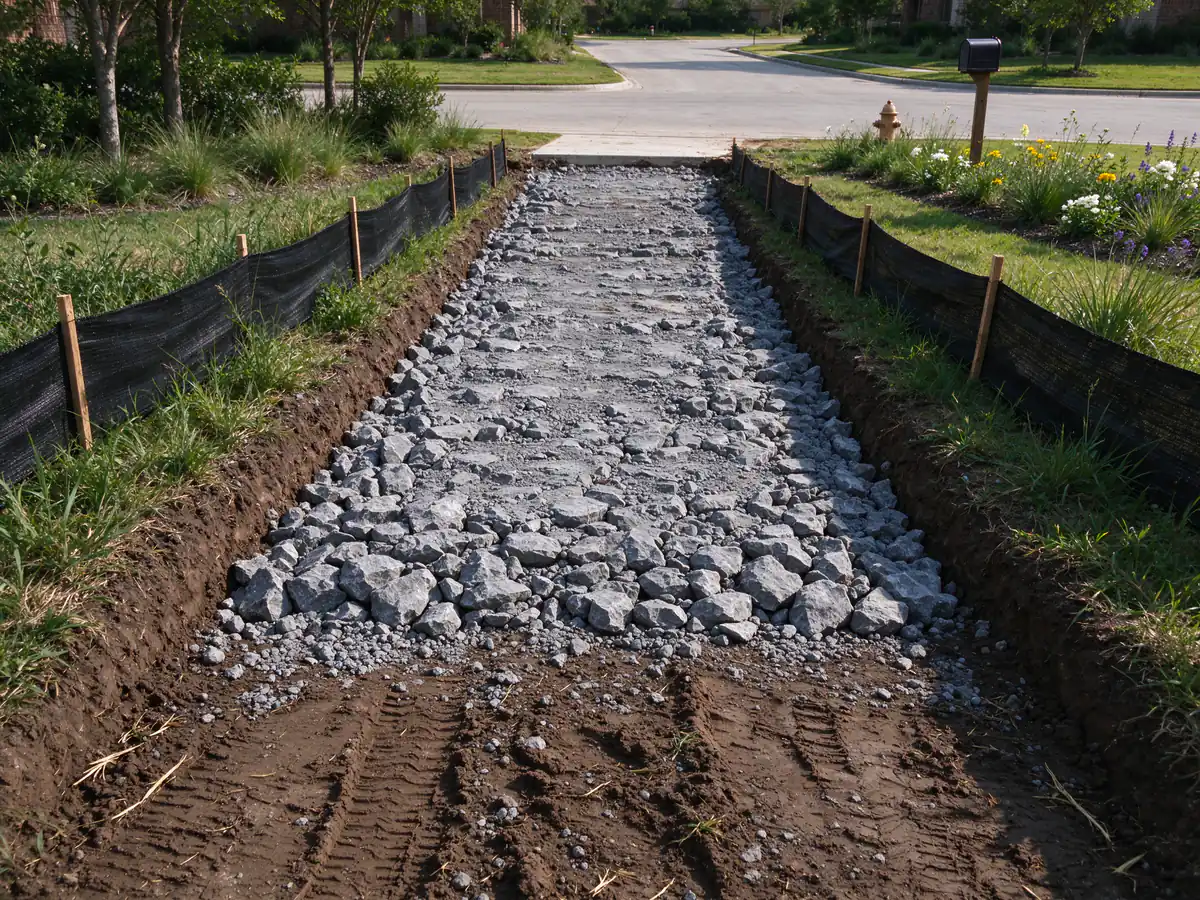
Representative photos of this type of work, not photos of specific completed jobs.