
Last Updated:
Clearing and grubbing is the line item builders, engineers and developers use when they need the vegetation gone and the ground underneath clean of roots and buried wood. Homestead Land Clearing offers clearing and grubbing across Frisco and the wider Collin and Denton County market, for residential building pads and commercial sites, with the work done by licensed and insured contractors. The term is a specification, not a slogan. Clearing removes what is above ground: trees, brush, fences, trash. Grubbing removes what is below it: stumps, roots, root mats and organic material that would rot under a slab, a pavement section or compacted fill. The two are priced and inspected separately on most plans, and the line between grubbing and earthwork is where most scope disputes start.
What happens on the first visit
On a grubbing job, the first visit works from the plans. These are the planned steps.
- Walk the property. Boundaries, the trees you want to keep, slopes, wet spots, fences, and what is buried or overhead, checked against the clearing and grubbing limits on the plans.
- Check the rules for that address. Tree permit and survey status, burn options, creek or floodplain limits, and utility locates through Texas811. In Frisco the City locates its own lines separately for permitted work.
- Write the scope. Method, finish level, stumps, debris plan and erosion control, in writing, before a price.
- Clear and hand off. The site is left at the agreed finish, ready for the excavation or grading contractor.
What grubbing removes and why it matters under structures
Wood buried in soil does not stay put. A stump left under a slab or a root mat left under a driveway decays over years, and as it does it leaves soft pockets and voids. Fill placed over organic material cannot be compacted properly, and the surface above it settles unevenly. On Frisco’s Houston Black and Austin clays, which USDA NRCS rates as high shrink-swell, the soil already moves with moisture; organic pockets add another source of movement that no foundation design wants.
So grubbing takes out:
- Stumps and root balls, usually by excavator, from every area that will carry a structure, pavement or fill.
- Root mats and large lateral roots that spread beyond the stump.
- Buried organic debris, such as old brush piles pushed into a draw years ago, rotted logs and buried fence posts.
How deep that goes is set by the plans, the spec or a geotechnical report, not by a rule of thumb. If none of those says, the question goes to the engineer or builder before a price is written. Outside the structural areas, grinding stumps below grade is often enough, and the stump grinding and removal page explains the difference. The guide on clearing vs grubbing covers the terms in plain language.
Mechanically pulling stumps and roots disturbs soil 16 inches deep or more, which Texas law treats as excavation needing a Texas811 notice at least 48 hours ahead, excluding weekends and holidays. On a commercial site there are often existing lines along the frontage; see clearing near utilities and power lines.
Where grubbing stops: topsoil stripping and the excavation handoff
Topsoil stripping sits right on the boundary. The dark, organic surface layer is not suitable under a building or paving, so it is usually stripped and stockpiled for reuse in landscaping. That is earthwork, and on most North Texas jobs the excavation or grading contractor does it as the first step of their contract. Grading, leveling, cut and fill and building pads are not part of this service; they are handed off to that separate trade.
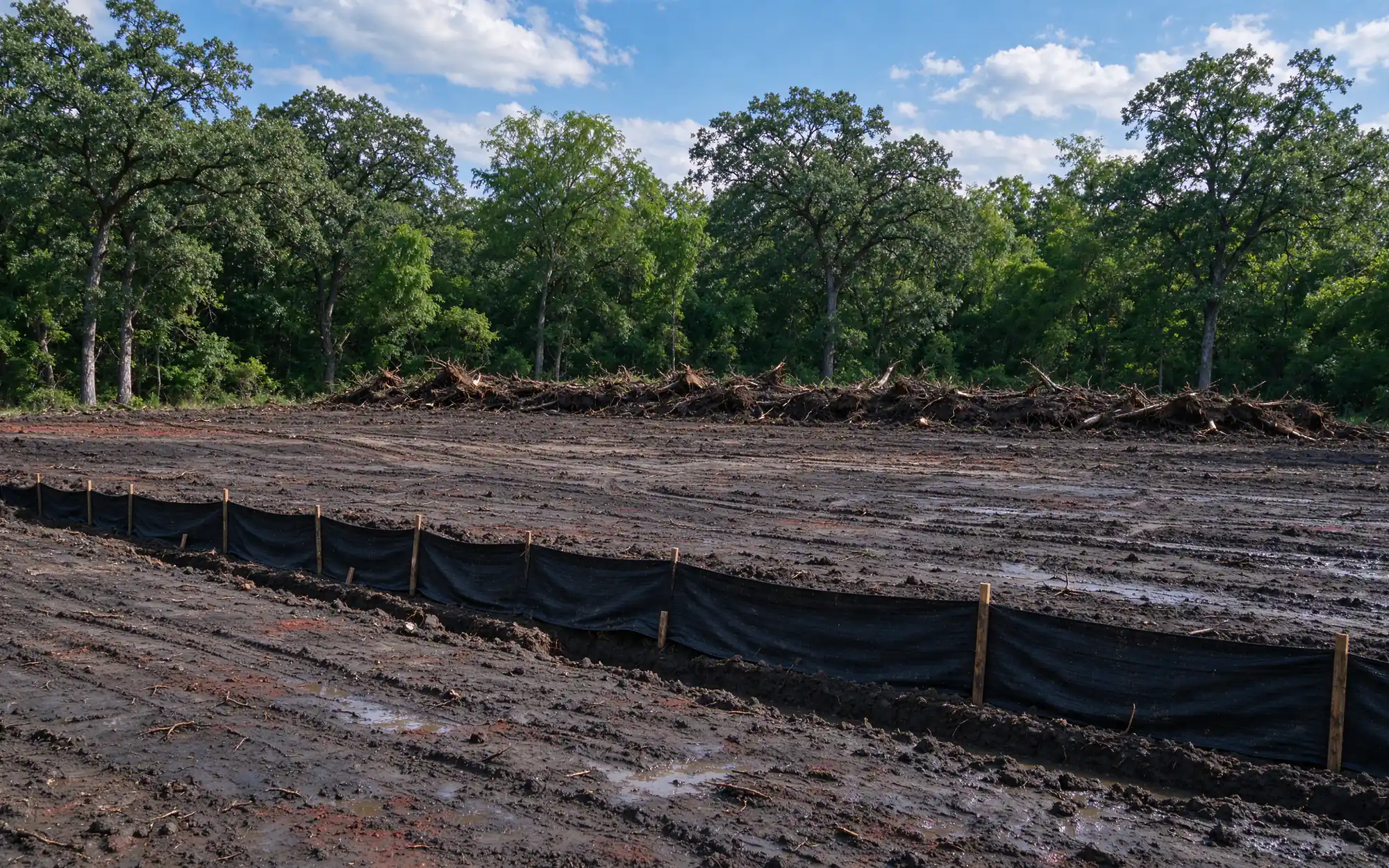
The handoff works best when the scope says exactly what the earthwork contractor receives: clearing complete to the limits, grubbing complete under structural areas, holes from extraction left open or roughly filled, debris gone, silt fence in place. When that is written down, nobody pays twice for the same roots, and nobody discovers a buried stump under the pad after the forms go in. The guide to clearing land to build a house walks through the same sequence for a single home.
Residential pads vs commercial sites
On a residential lot, grubbing can be limited to the slab and driveway footprint. The rest of the lot gets cleared, and its stumps ground or left, depending on what will be yard. That keeps soil disturbance and cost down, and it keeps keeper trees in play. Frisco’s Tree Removal Permit does not apply to trees on a single-family or two-family lot within a plat of record, but unplatted land is different, as the lot clearing page explains.
On a commercial site or subdivision, the whole development footprint is usually cleared and grubbed under paving, utilities and buildings. Frisco requires a tree survey by an arborist or Texas-licensed landscape architect with grading plans and civil sets; tree removal cannot proceed until the survey is approved and the permit issued, and the City’s landscape architect field-verifies trees before grading and clearing begin. Protective fencing at the drip line of saved trees is inspected before the preconstruction meeting. The Frisco tree removal permit guide covers mitigation, and commercial land clearing covers larger site work.
Floodplain land adds another layer. In Frisco, removing trees or other vegetation in the base floodplain or floodway needs a grading permit or a City approval letter, and fines of $300 per caliper inch, up to $2,000 per offense, apply to the contractor as well as the owner. See clearing near creeks and floodplain.
Stormwater rules once the ground is open
Grubbing exposes far more soil than clearing alone, and Texas regulates that by acreage. Under TCEQ’s Construction General Permit, TXR150000:
| Area disturbed | TCEQ category | What applies |
|---|---|---|
| Under 1 acre | Not covered | Unless part of a larger common plan of development that disturbs 1 acre or more |
| 1 to under 5 acres | Small construction site | Permit conditions and a stormwater pollution prevention plan |
| 5 acres or more | Large construction site | Notice of Intent and plan; NOI fee $225 electronic, $325 paper |
A common plan of development counts toward the total, so a lot inside a subdivision under construction can be covered even when the lot itself is small. Frisco adds its own rule: every property owner must keep silt from leaving the property and reaching streets or drainage, with fines up to $500 a day, and the City can hold permits or inspections where erosion control is missing. On TxDOT projects in the Dallas district, silt fence runs about $3.50 to $5 per linear foot installed and about $1 per foot to remove; short runs on one lot can cost more per foot. The guides on the stormwater permit for land clearing and erosion control after land clearing go further.
What clearing and grubbing costs
Public bids are the best local reference. A public bid by a Collin County municipal utility district for 75 acres of subdivision site work drew clearing-and-grubbing prices of about $500 to $3,200 per acre from seven bidders. That spread, on one site with one set of plans, shows how much pricing depends on each contractor’s method, disposal plan and appetite for the work.
Commercial site clearing per acre has no single published figure here, so it is priced from the plans and the ground. The drivers:
- Tree density and diameter. Wooded ground costs several times what open pasture does.
- Grubbing area and depth. Footprint-only grubbing on a home lot is a fraction of full-site grubbing.
- Disposal. Hauled stumps and root balls go by the ton: North Texas Municipal Water District charges $80 per ton at its transfer stations and $52 per ton at the 121 Regional Disposal Facility, each with a one-ton minimum. Burning is allowed in the DFW ozone nonattainment area only when no practical alternative exists.
- Soil and season. Wet clay slows extraction; NOAA normals put the wettest months at DFW Airport in May and October.
- Erosion control and tree protection. Silt fence, entrances and drip-line fencing are real line items.
Small sites carry a minimum regardless of acreage. For per-acre context see land clearing cost per acre, and to compare bids line by line, what a land clearing quote should include.
What's included
- A walk of the site against the plans: clearing limits, grubbing limits, trees to save, wet spots, fences and anything buried or overhead
- A check of the rules for that address: tree survey and permit status, floodplain limits, stormwater permit thresholds and utility locates
- A written scope that matches the spec: clearing area, grubbing area and depth, debris disposition and erosion control
- Clearing of trees, brush, fences and surface debris inside the clearing limits
- Grubbing of stumps, root mats and buried organic material from slab, driveway, pavement and fill areas
- Grubbing limited to the slab and driveway footprint on residential lots where that is what the plan needs
- Debris hauled to a permitted facility, chipped, or handled as the scope states
- Silt fence and seeding as add-ons, placed to match the stormwater plan
Clearing, grubbing and stripping: who removes what
| Clearing | Grubbing | Topsoil stripping | |
|---|---|---|---|
| What it removes | Trees, brush, vines, fences and debris above the ground | Stumps, roots, root mats and buried organic material below the ground | The dark, organic-rich surface soil layer |
| Typical depth | Surface only | To the depth the plans or spec set, deep enough to get roots and organics out of structural areas | Set by the soils report or civil plans |
| Where it applies | The whole clearing limit | Under slabs, drives, paving, utilities and fill | Under the building and pavement areas |
| Who usually does it | The clearing contractor | The clearing contractor | Usually the excavation or grading contractor, unless the scope assigns it |
| What it leaves | Stumps and roots still in the ground | Disturbed soil with holes to fill and compact | A stockpile of topsoil and a firmer subgrade |
Related resources
- Decision GuideWhat is the difference between clearing and grubbing?
- LearnDo you need a stormwater permit for land clearing in Texas?
- LearnHow do you clear land to build a house?
- LearnWhen do you need a City of Frisco tree removal permit?
- LearnHow do you control erosion after land clearing?
- Decision GuideWhat should a land clearing quote include?
Representative photos of this work
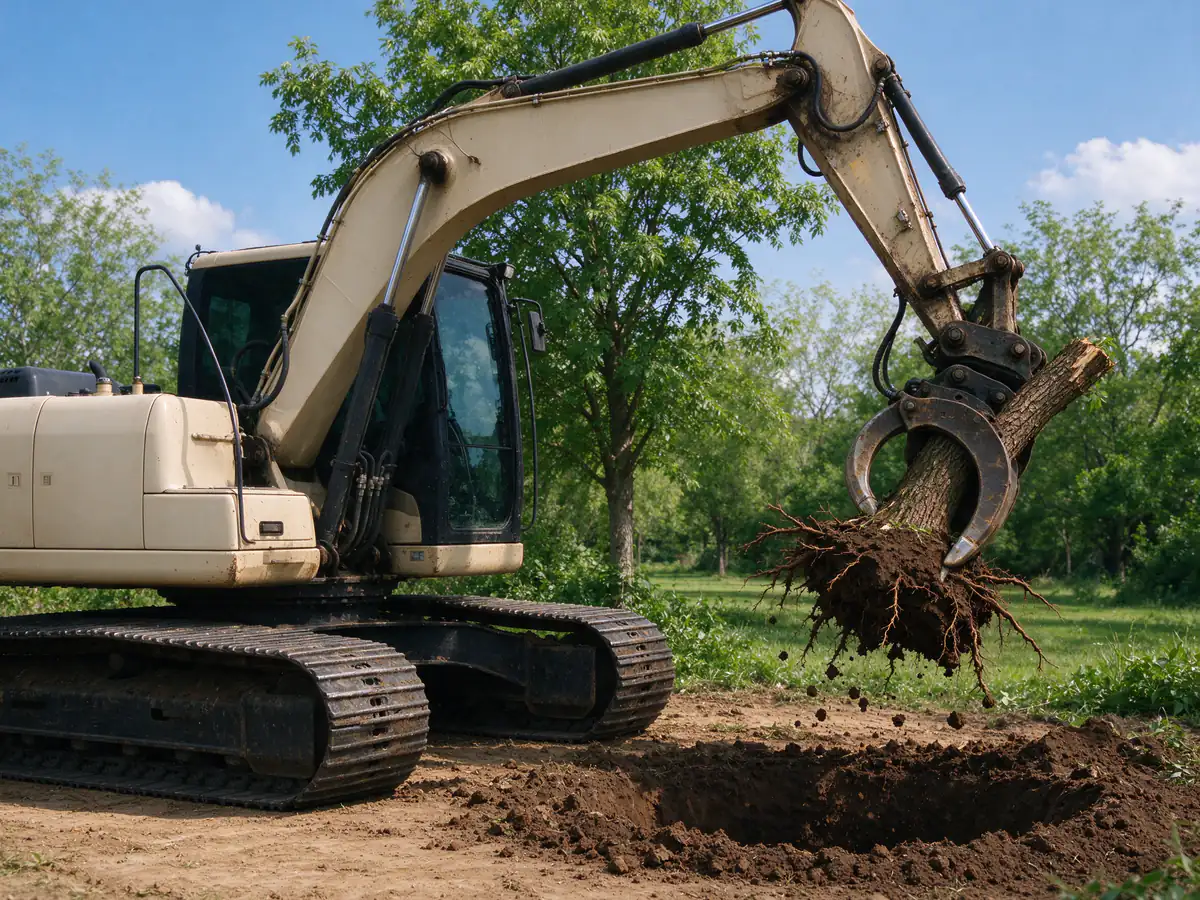
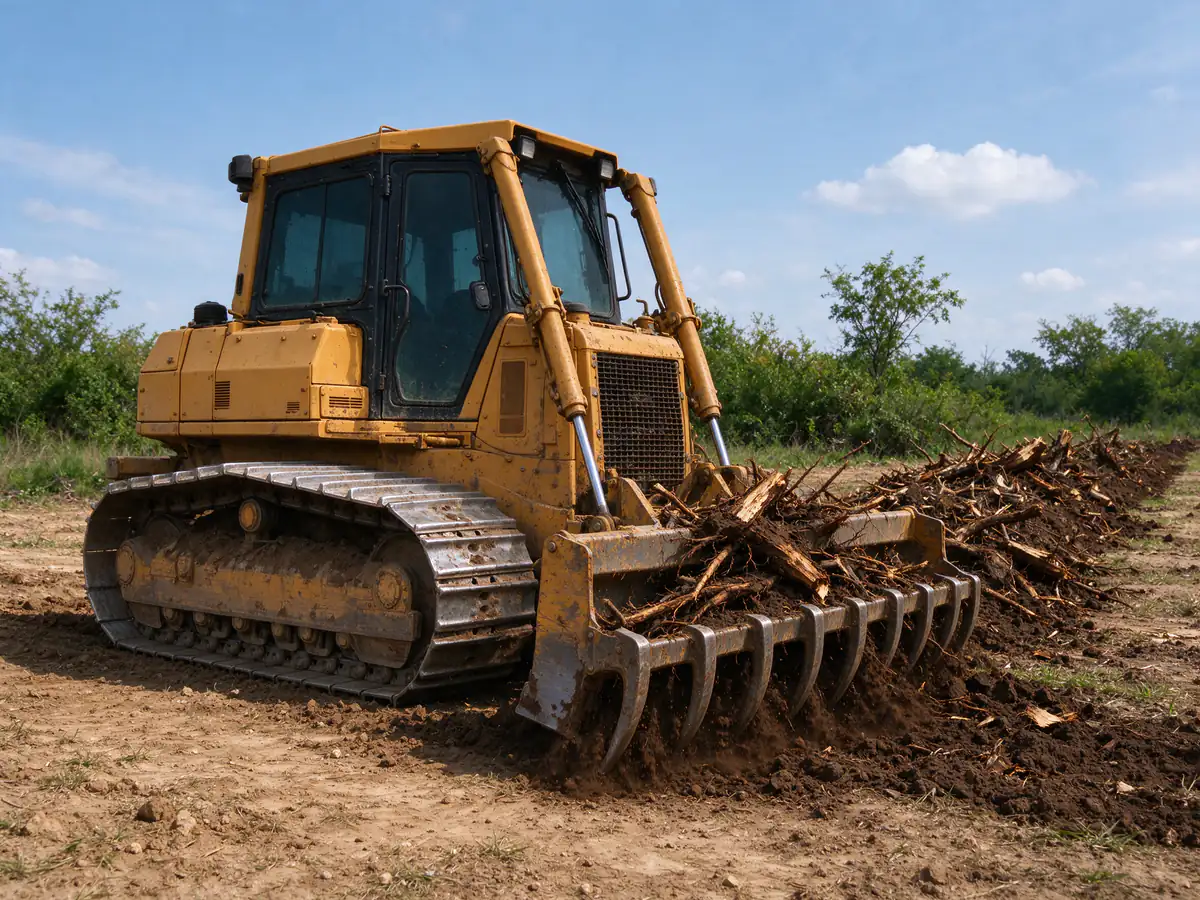
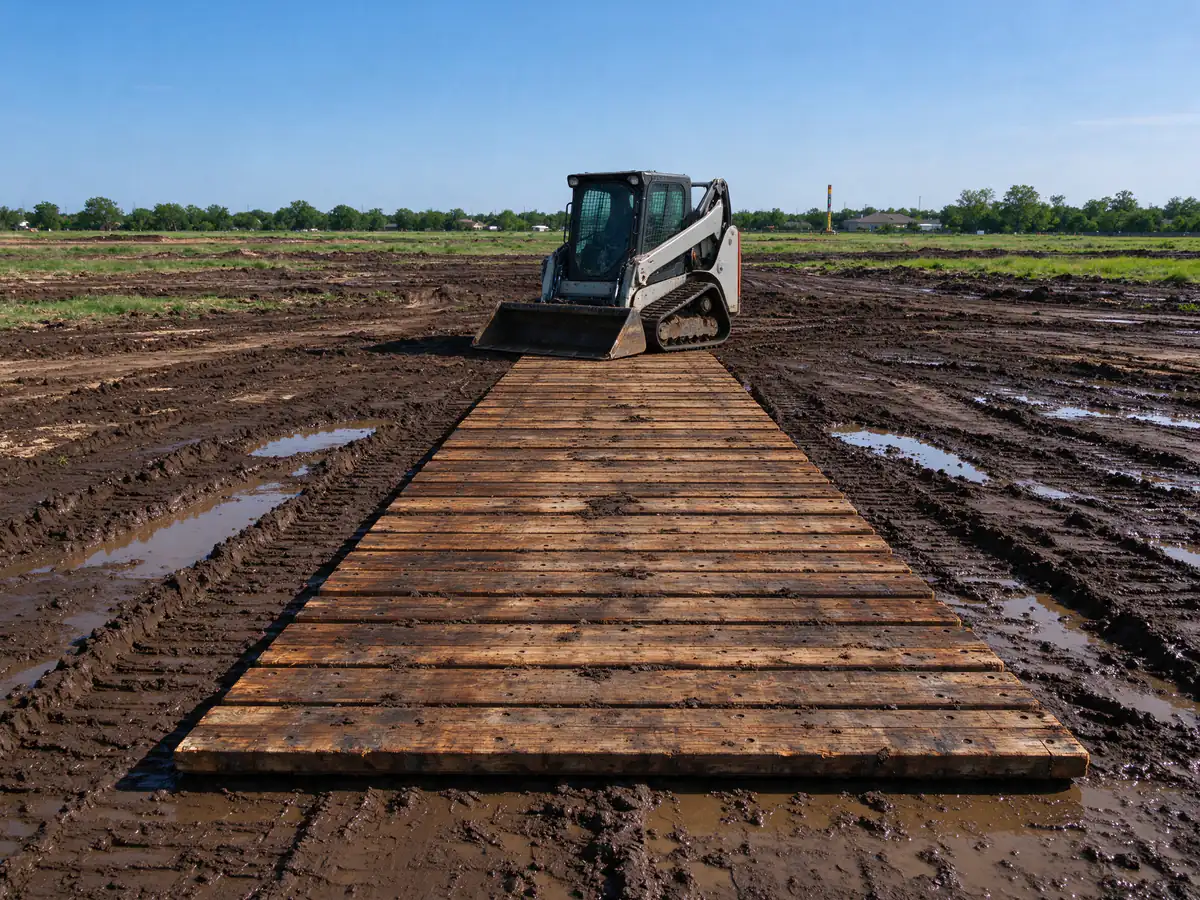
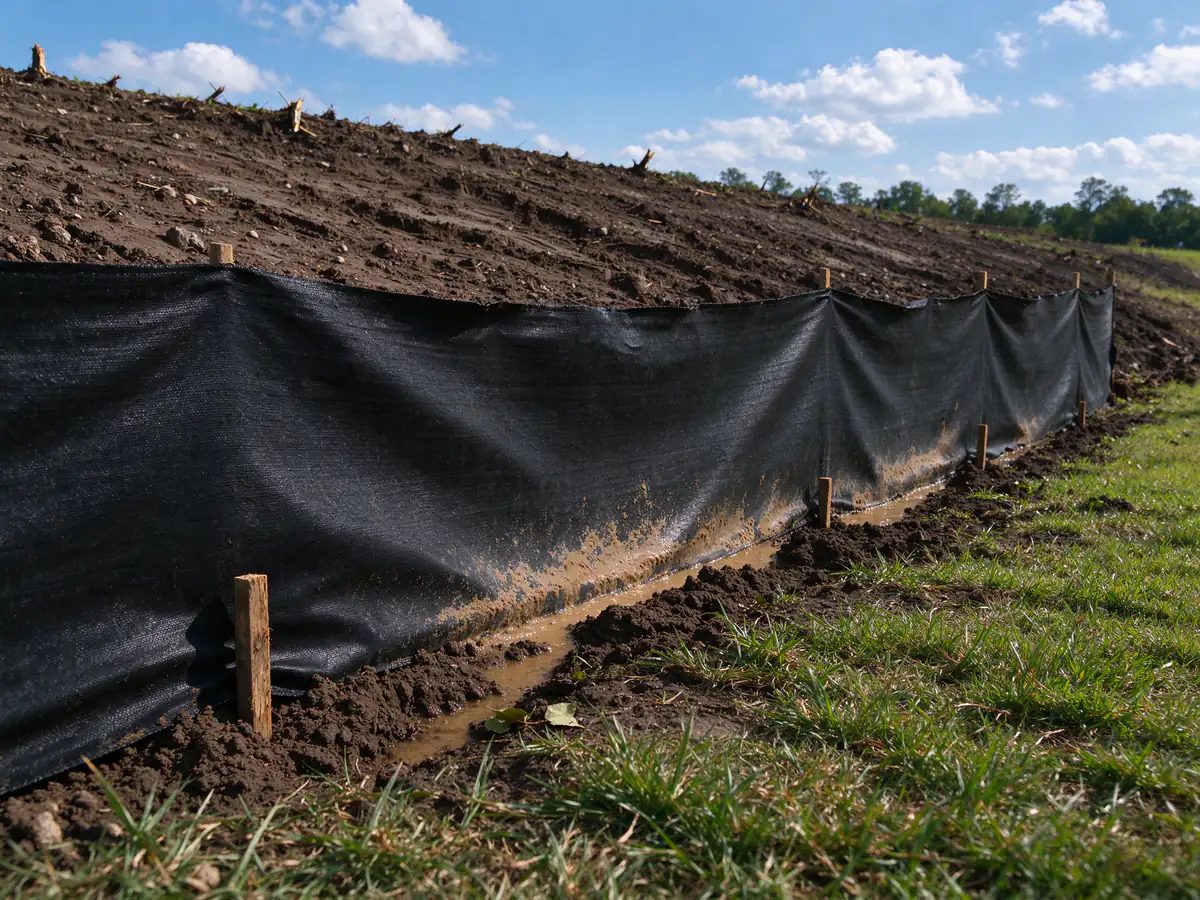
Representative photos of this type of work, not photos of specific completed jobs.