Last Updated:
Brush clearing is the work of taking out cedar, mesquite, vines, saplings and woody undergrowth without, in most cases, stripping the land bare. Homestead Land Clearing offers brush clearing across Frisco and the surrounding Collin and Denton County acreage and suburbs, for homeowners and commercial owners alike, with the work done by licensed and insured contractors. The jobs vary a lot. One owner has a back acre where cedar has closed in the view. Another has a pasture with mesquite spreading from the fence rows, or a vacant lot that drew a Code Enforcement letter. What they share is a decision about method, about how far down the cut goes and about where the brush ends up, and those three choices decide whether the work lasts.
What happens on the first visit
The first visit sorts out what has to go, what stays and what the land should look like afterward. These are the planned steps.
- Walk the property. Boundaries, the trees you want to keep, slopes, wet spots, fences, and what is buried or overhead.
- Check the rules for that address. Whether the City’s tree permit applies, burn options (often none), creek or floodplain limits, and utility locates through Texas811. In Frisco the City locates its own lines separately for permitted work.
- Write the scope. Method, finish level, stumps, debris plan and erosion control, in writing, before a price.
- Clear and hand off. The land is left at the agreed finish, ready for seeding, grazing or the next trade.
Cedar, mesquite and the rest of the undergrowth
Brush in North Texas is mostly a handful of species, and each one asks for different handling. Texas Parks and Wildlife lists eastern red cedar, mesquite, osage orange and greenbriar as common in the Cross Timbers of western Denton County, and the same plants fill fence rows and creek edges on the Collin County side.
Cedar is the easy one to kill and the hardest to see past. Texas A&M AgriLife classes eastern redcedar as a non-resprouting juniper: cut the main stem below the lowest green limbs and that tree is finished. The catch is the cut height. A stub with a live branch on it keeps growing, so cedar work done in a hurry leaves a field of short, bushy cedars. AgriLife’s Brush Busters guidance is stricter for redberry juniper, which does resprout and has to be grubbed out below the soil surface, so the species matters.
Mesquite is the opposite case. AgriLife describes its belowground bud bank, which lets it survive cutting and even fire. Shred a mesquite at ground level and it typically comes back as a clump of several stems. That is why mesquite clearing either goes deeper, grubbing out the bud zone with an excavator or skid steer, or comes with a follow-up plan that someone owns, such as mowing resprouts or a treatment program by a licensed applicator, which is a separate service. The guide on whether brush grows back after clearing explains the regrowth patterns species by species.
Vines and thorny undergrowth (greenbriar, poison ivy, Chinese privet thickets along creeks and old fencerows) slow the work more than their size suggests. Vines bind brush together so it comes out in tangled mats, and they hide wire and debris. Poison ivy is a reason not to burn: the CDC’s NIOSH warns that smoke from burning poison ivy causes lung irritation. The North Texas invasive brush guide covers privet, honey locust and osage orange in more depth.
Saplings and small hardwoods such as hackberry also resprout from a cut stump. On ground meant to stay open, the scope should say whether those stumps get ground, grubbed or left.
Skid steer, mulcher or hand cutting
Three methods do almost all brush work, and most properties end up using two of them.
A skid steer or compact track loader with a rotary brush cutter knocks brush down fast, and the same machine with a grapple picks it up and stacks it or loads it for haul-off. This is the choice when the brush has to leave the property: before a fence goes in, ahead of a builder, or where the owner simply does not want a mulch layer. The trade-off is more handling, more trips and more ground contact.
A forestry mulcher grinds standing brush and small trees where they stand and leaves the material on the ground as mulch. Nothing is piled or hauled, which often makes it the lower-cost route on thick cedar. It does not pull roots, and a heavy mulch mat is not what anyone wants under a future slab. The full method is on the forestry mulching page, and forestry mulching vs land clearing compares the two directly.
Hand cutting with chainsaws and brush saws is slow, but it is the right tool along fences, under keeper trees, near a house, on steep creek banks and in yards where a machine would do more damage than the brush. It is also how growth inside the drip line of a protected tree gets handled: Frisco’s ordinance allows clearing under protected trees, where approved, only by hand or with mowers on turf tires. Where most of the value is in a few good trees, selective clearing is the better scope.
Fence rows, acreage and suburban yards
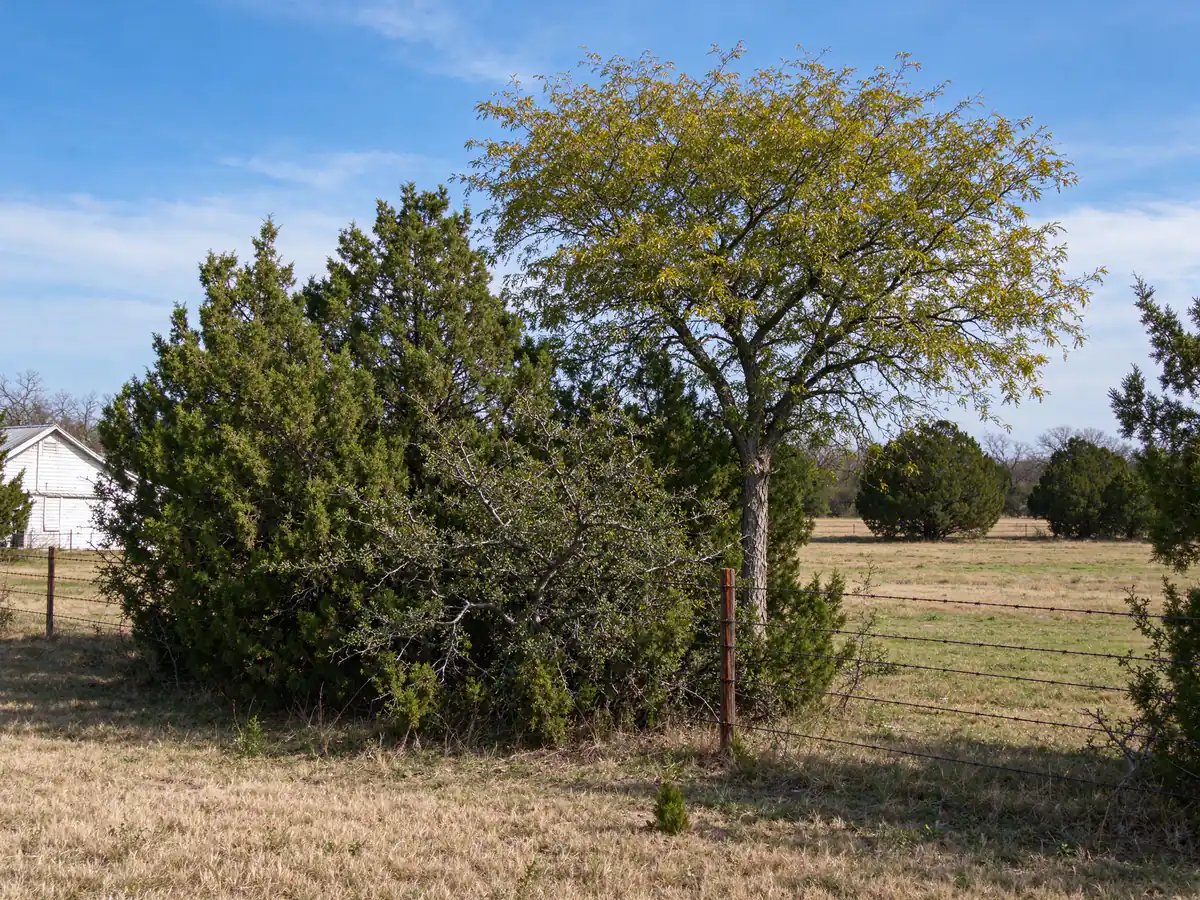
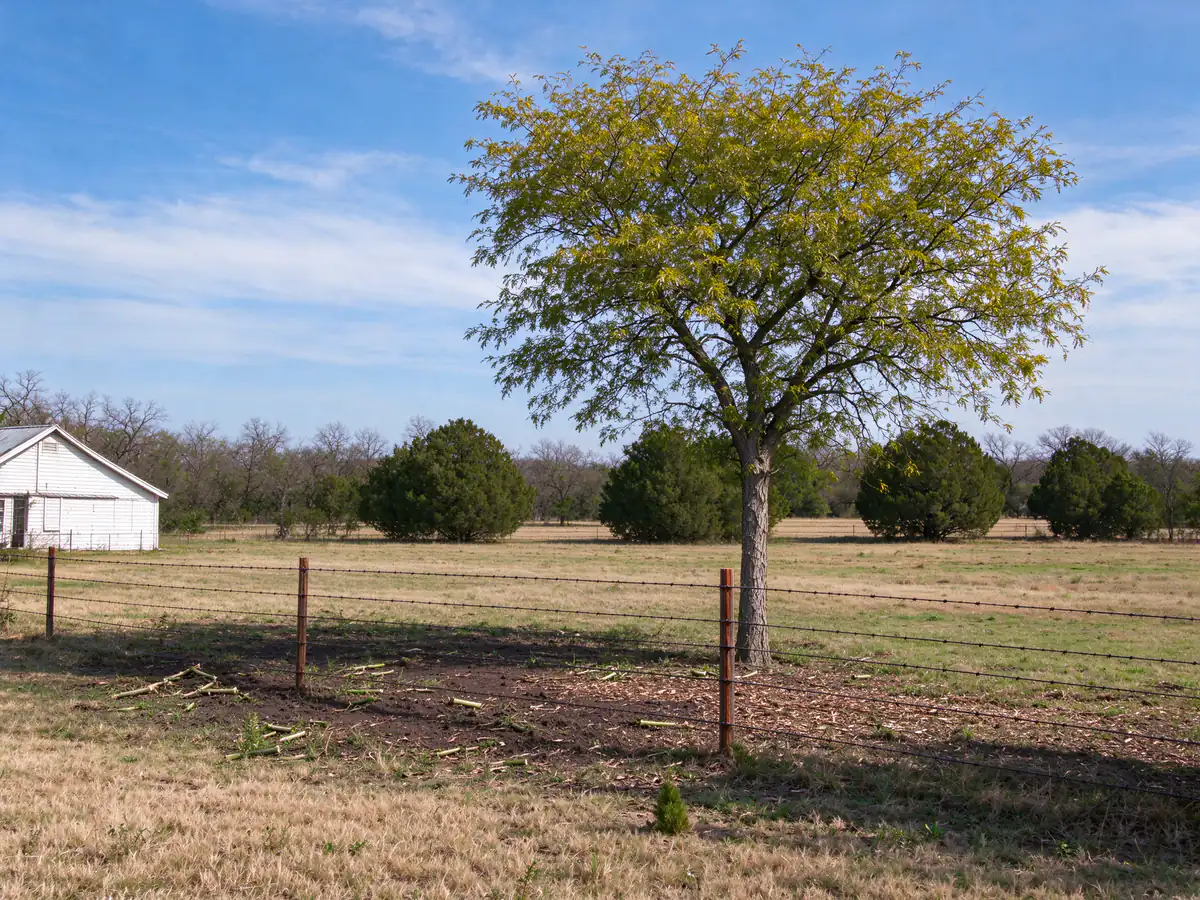
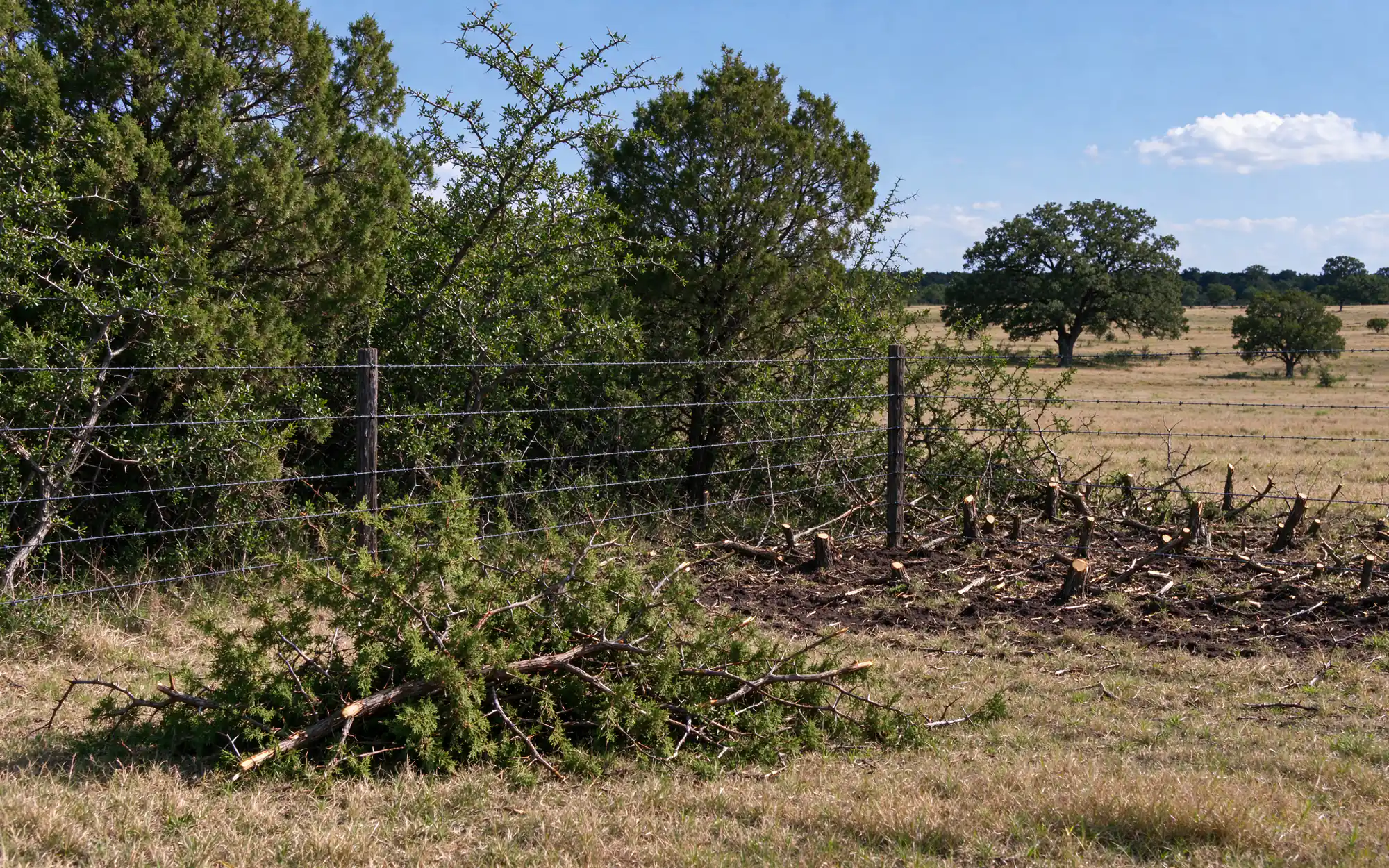
Fence rows are where brush starts on most North Texas acreage. Birds perch on the wire and drop cedar and hackberry seed underneath, and a fence line that nobody mows becomes a hedge of mixed brush within a few years. Clearing them means cutting growth that is woven through the wire, usually by hand for the last few feet, then mulching or stacking from the open side. Old wire buried in the brush is a hazard for machines and people alike. Fence line clearing covers that work, including clearing ahead of a new fence; building the fence itself is a separate trade.
Acreage and pasture work is about scale and regrowth. On open ground a mulcher or cutter can cover a lot of area in a day, and the bigger question is what keeps the brush from returning: grazing, mowing, reseeding or follow-up treatment. Pasture clearing covers reclaiming grazing land, including bush hogging. On land with an agricultural valuation, a change in how the land is used can trigger rollback taxes; the guide on ag valuation and land clearing explains the mechanism without giving tax advice.
Suburban yards inside Frisco are a different job. Access is a gate, the neighbors are close, and the machine has to fit. Frisco Code Enforcement limits ground vegetation to 12 inches, which is why vacant and absentee lots get letters; overgrown lot clearing is built for that situation. Haul-off matters more on small sites, because there is nowhere to leave mulch or piles.
Clearing brush is mostly surface work, but grubbing mesquite roots or stumps with a machine can disturb soil 16 inches deep or more. Texas law treats that as excavation, which needs a Texas811 notice at least 48 hours ahead, excluding weekends and holidays. Near overhead lines, Oncor says to stay, and keep equipment and materials, at least 10 feet from high-voltage lines.
What brush clearing costs
Brush clearing cost per acre depends on density, species, access and where the brush goes. As national budgeting ranges, HomeGuide lists:
| Brush density | Typical budgeting range per acre (HomeGuide, national) |
|---|---|
| Light brush, few young trees | $800 to $1,800 |
| Heavy brush, roughly half brush and half trees | $1,600 to $3,000 |
| Wooded, trees and brush together | $2,500 to $5,000 |
Public contracts give a local reference point. Brush clearing on large public right-of-way contracts in TxDOT’s Dallas district, which includes Collin and Denton counties, was bid at $1,200 to $2,000 per acre (Texas Department of Transportation bid results). Those are big, spread-out highway areas with no grubbing, no keeper trees and no private-property access, so treat them as a floor for open acreage, not a price for a backyard.
What moves a quote inside those ranges:
- Stem size and density. Thick cedar with trunks several inches across takes longer than scattered saplings.
- Regrowth work. Grubbing mesquite roots costs more than shredding, and pays off only if the land is meant to stay open.
- Hand work. Fence rows, keeper trees and slopes slow everything down.
- Debris. Mulching in place avoids hauling. Hauled brush pays tipping: the City of Plano’s Custer Road yard-waste facility, which Frisco shares, charges $22 per cubic yard for brush and limbs with a $66 minimum.
- Small jobs. A small yard carries a minimum charge, stated in writing in the scope.
Burning is rarely the shortcut it seems. Collin and Denton are in the DFW ozone nonattainment area, where TCEQ allows burning land-clearing debris only when no practical alternative exists, and county burn bans come and go by Commissioners Court order. The guide to burning brush in Collin and Denton County explains the rules, and land clearing debris removal covers hauling. For a fuller cost picture, see land clearing cost per acre or try the land clearing cost estimator. On rural homesites, brush thinned around the house also works as a fire break, covered in fire breaks around rural homes.
What's included
- A walk of the property to mark the brush to remove, the trees to keep, fences, wet spots and anything buried or overhead
- A check of the rules for that address: tree permit status, burn options, creek and floodplain limits and utility locates
- A written scope naming the method for each area (machine cutting, mulching or hand cutting), the finish height and the debris plan
- Cutting or mulching of cedar, mesquite, saplings, vines and woody shrubs inside the agreed limits
- Hand work along fence lines, around keeper trees and close to buildings
- Brush piled for haul-off, chipped, or mulched in place, as the scope states
- Grubbing of mesquite or other resprouting roots where the scope calls for it
- Silt fence and seeding as add-ons where bare ground is left
Three ways to take out brush, and where each one fits
| Skid steer with cutter and grapple | Forestry mulcher | Hand cutting with saws | |
|---|---|---|---|
| How it works | A rotary brush cutter knocks growth down; a grapple picks up stems and stacks or loads them | A rotating head grinds standing brush and small trees into mulch where they stand | Crews cut stems by chainsaw or brush saw and drag them out by hand |
| Debris left | Piles to chip, haul or (where legal) burn | A mulch layer on the ground; nothing to haul | Piles to chip or haul |
| Best fit | Open acreage and pasture edges where brush must leave the site | Dense cedar and undergrowth on land that will stay as yard, pasture or trail | Fence rows, keeper trees, slopes and tight suburban yards |
| Ground disturbance | Moderate; tracks and grapple work can scuff turf | Low to moderate; heavy on saturated clay | Very low |
| Limits | Grapple work can tear up wet ground and fences if crowded | Not for areas that will carry a slab; roots stay in the soil | Slow and labor heavy on large areas |
Related resources
- LearnDoes brush grow back after clearing?
- LearnWhat should you know about hackberry, privet and honey locust removal in North Texas?
- LearnCan you burn brush in Collin and Denton County?
- Cost GuideHow much does land clearing cost per acre in North Texas?
- Decision GuideForestry mulching vs land clearing: which one does your property need?
Representative photos of this work
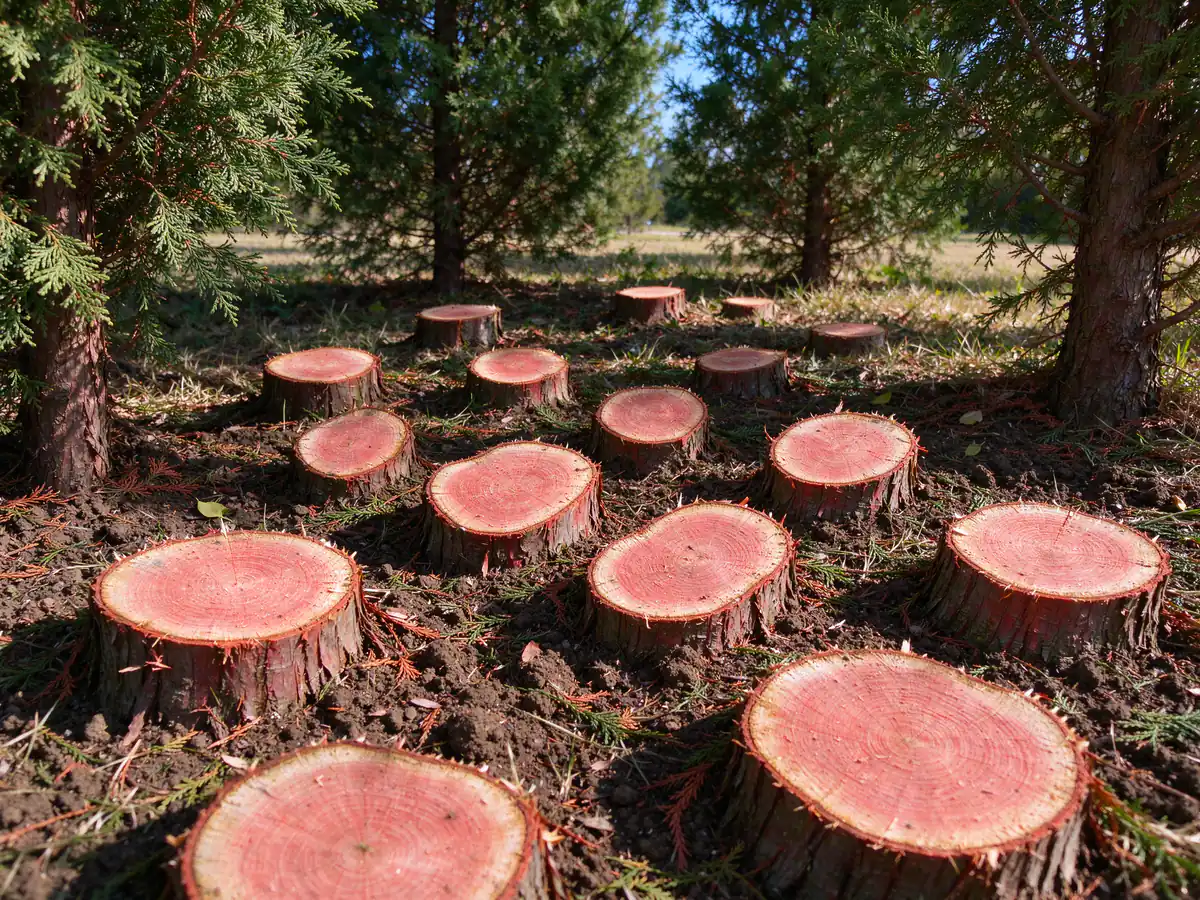
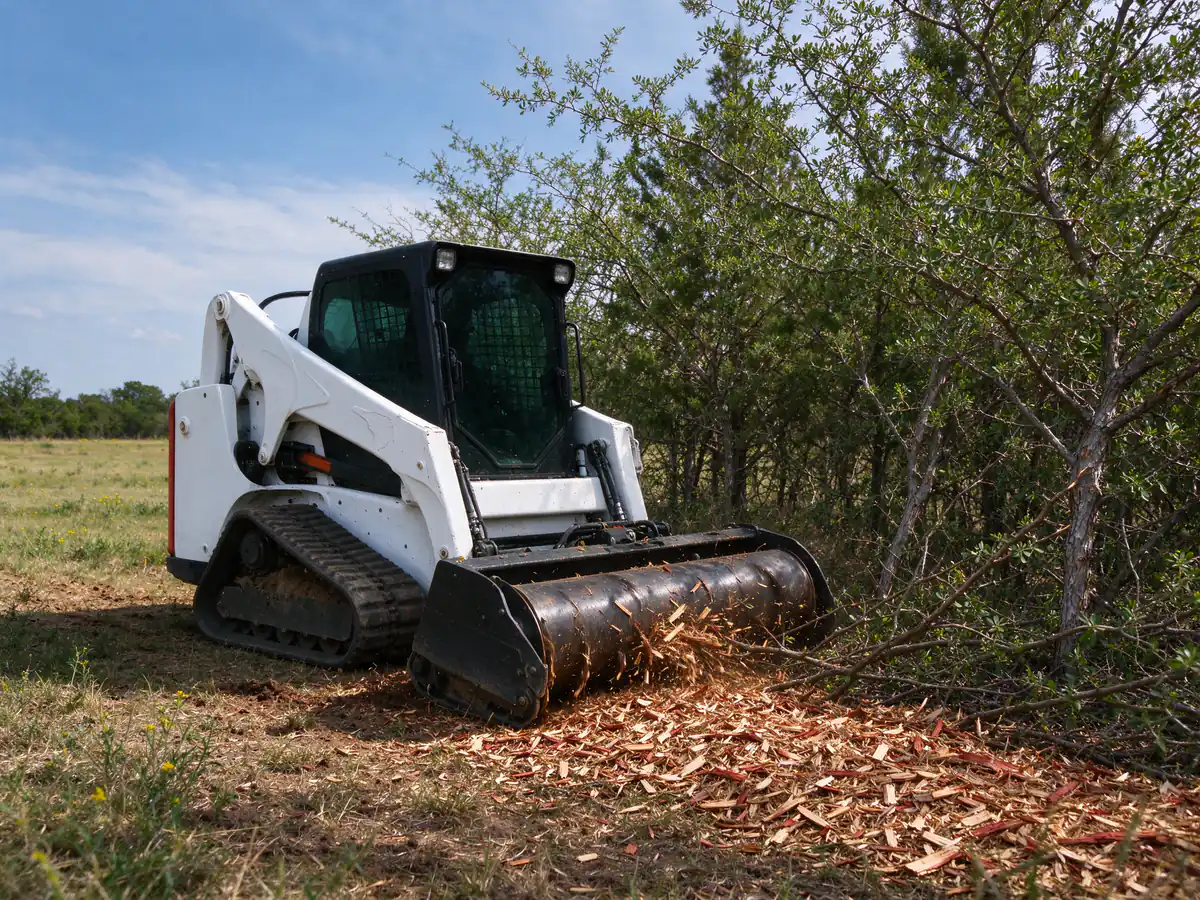
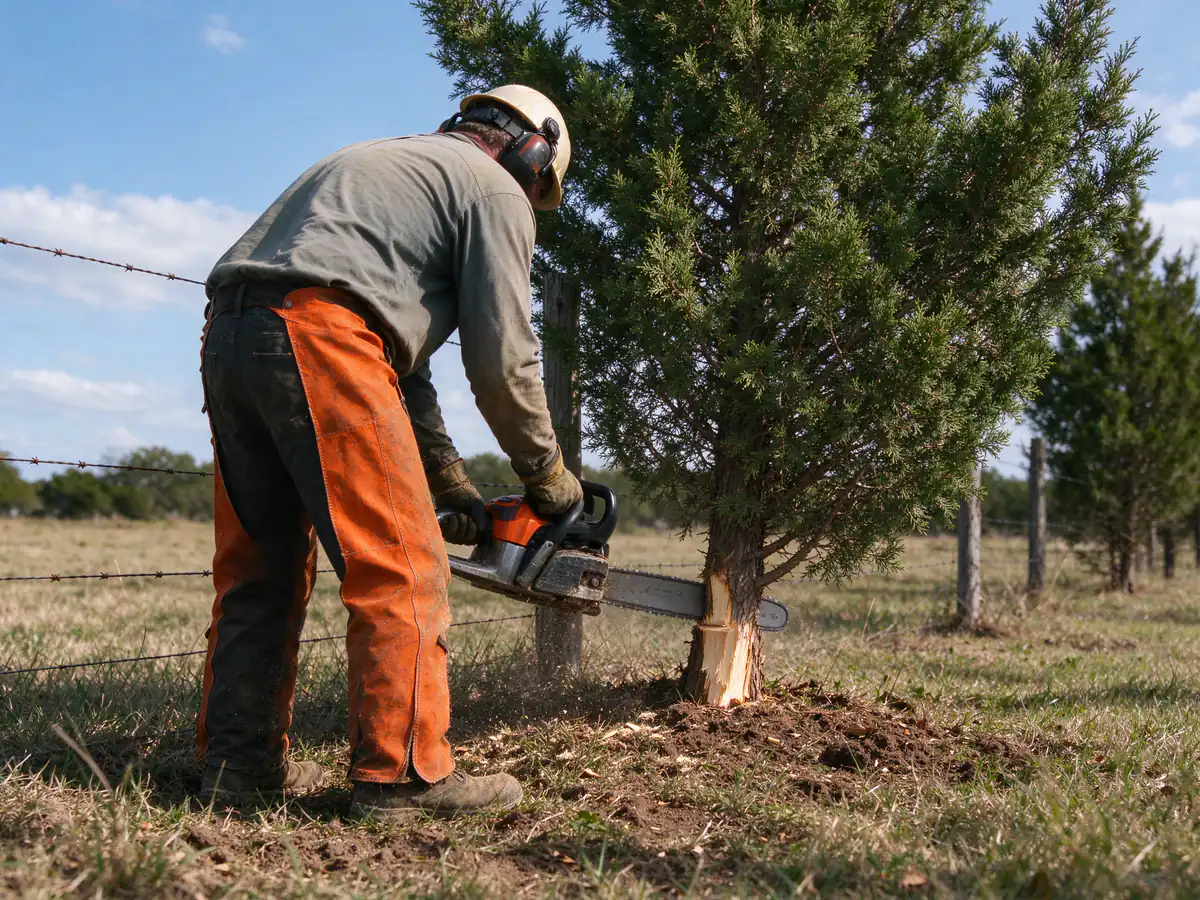
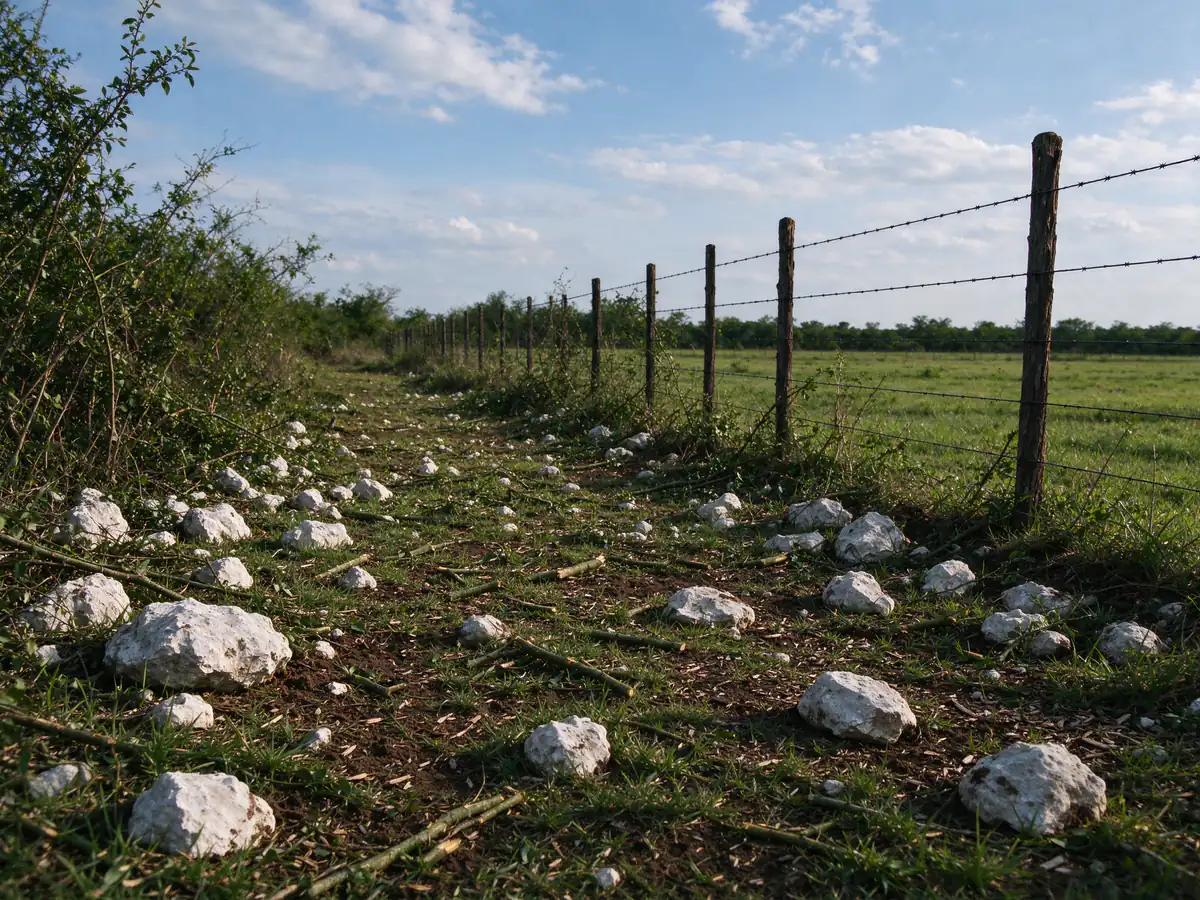
Representative photos of this type of work, not photos of specific completed jobs.
Before and after (representative)