
Last Updated:
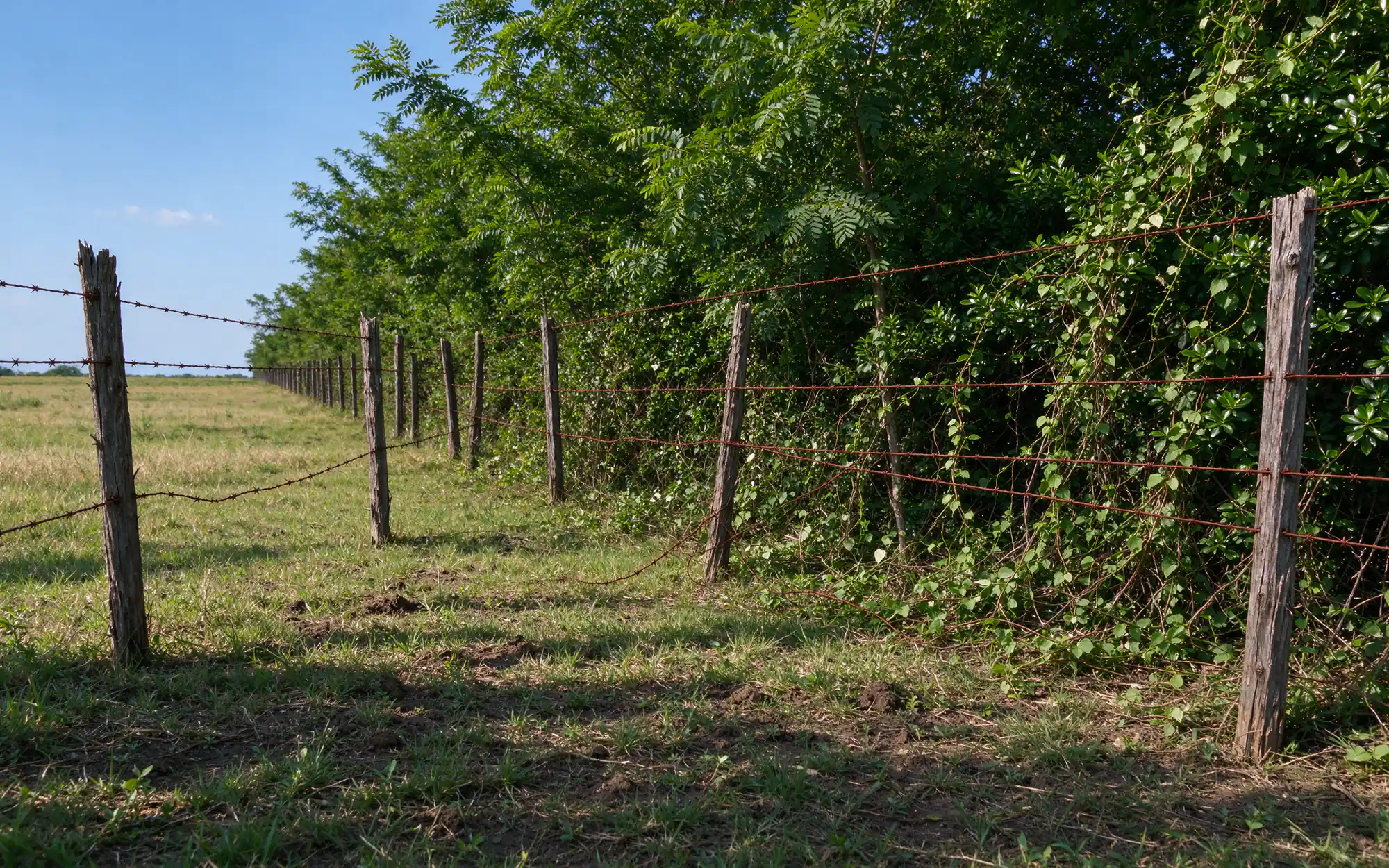
Fence line clearing is narrow work with outsized consequences. A fence row that has not been cleared for years becomes its own small woodland: privet, greenbriar, cedar, hackberry and saplings rooted right under the wire, with old strands buried in the leaf litter and grown into the trunks. Homestead Land Clearing offers fence line and fence row clearing on acreage and larger home sites around Frisco and across Collin and Denton counties, with the work done by licensed and insured contractors. The goal is a strip you can see down, mow or build along. Fence building is a separate trade and is not offered here, but a well-cleared line is what a fence contractor needs before setting the first post. If the whole pasture is overgrown, not just its edges, pasture clearing may be the wider scope.
What happens on the first visit
Fence rows hide more than most clearing jobs, so the walk matters.
- Walk the property. The full run, corners and gates, the trees you want to keep, slopes, wet crossings, old wire in the brush, and what is buried or overhead along the line.
- Check the rules for that address. Whether the tree permit applies to trees in the row, any creek or floodplain crossings, and utility locates through Texas811.
- Write the scope. Run length, strip width on each side, method, stumps, debris plan and erosion control if needed, in writing, before a price.
- Clear and hand off. The line is left at the agreed finish, ready for mowing or for the fence contractor.
Why fence rows grow shut
Birds perch on fences and drop seed along them, mowers stop a few feet short of the wire, and the row never gets the attention the open field does. The result is a strip where woody plants get years of head start. The City of Denton’s privet removal initiative names fencerows among the places Chinese privet invades, and the Texas Invasive Species Institute describes privet escaping from cultivation near streams and old fencerows. Texas Parks and Wildlife lists eastern red cedar, mesquite, bois d’arc and greenbriar as common in the Cross Timbers, which reach into western Denton County.
What grows back depends on the species. Texas A&M AgriLife describes eastern redcedar as a non-resprouting juniper, so a cedar cut below its lowest green limbs is gone. Mesquite resprouts from a bud bank below ground, according to AgriLife, so cutting alone only sets it back. A fence row cleared once and then mowed regularly stays open far longer than one cleared and left. The North Texas invasive brush guide and does brush grow back after clearing cover follow-up options.
Frisco’s code adds a practical reason to keep lines open. Ground vegetation cannot exceed 12 inches, and owners who cultivate crops must mow outer perimeters and the adjacent right-of-way. A fence row that has grown into a thicket can make that mowing impossible.
Hidden wire and old fencing
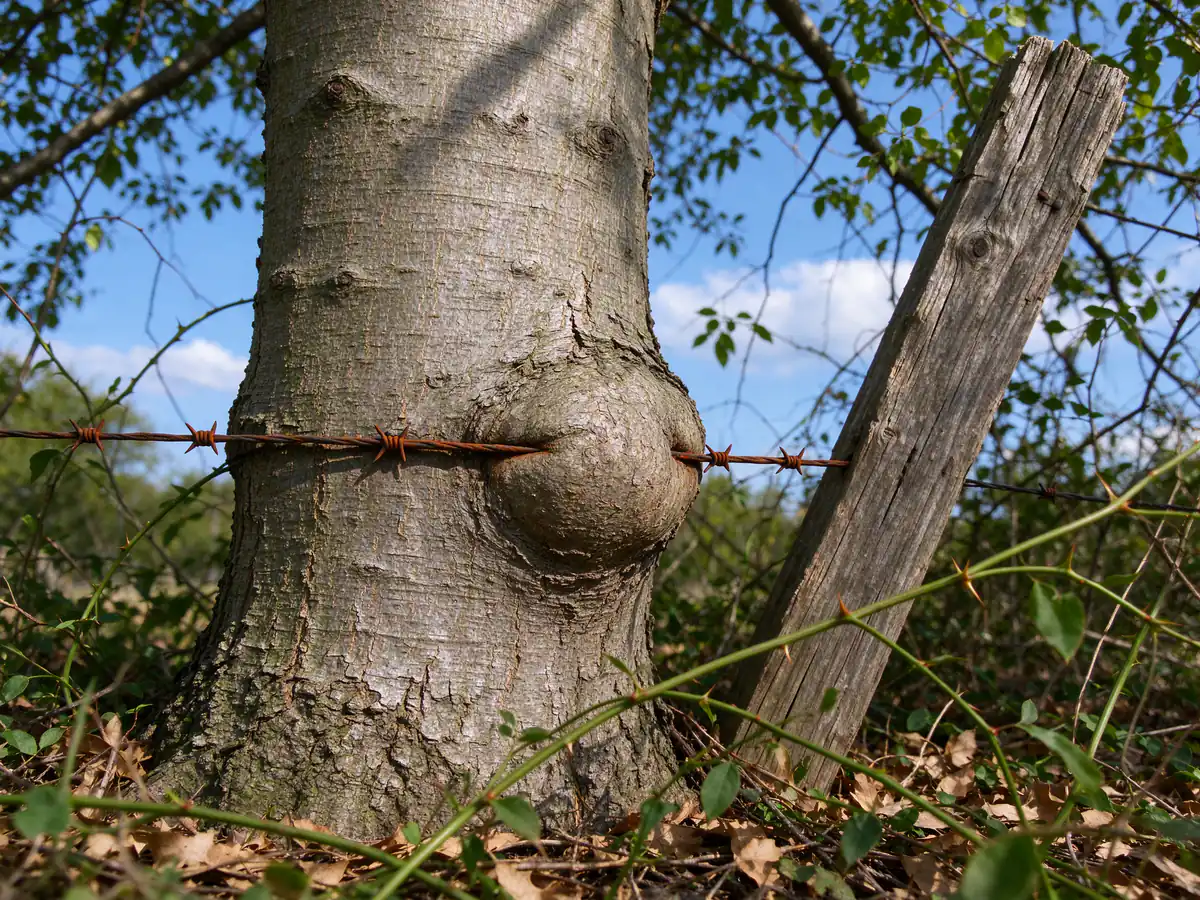
Old fence rows are where wire goes to hide. Strands fall and get buried under leaf litter. Trees grow around staples and wire until the metal sits inches inside the trunk. Previous owners sometimes ran a new fence beside the old one and left the first in the brush. That buried metal is the main hazard on this work: loose wire wraps around mulcher heads and tracks, and wire under tension can whip when a machine snags it.
A careful walk reduces the risk but cannot remove it, because some wire is invisible until the brush is gone. That is why fence row work usually starts by opening the brush, pulling what wire can be found, and only then running heavier equipment close to the line. Trees with wire grown through them are often cut flush rather than pushed, and the embedded section stays with the stump. Old wire, T-posts and wood posts are kept apart from the green waste. The City of Plano’s Custer Road yard-waste facility, which Frisco shares, does not accept fencing, so metal and treated posts take a separate disposal route. Land clearing debris removal covers where each kind of material goes.
Property lines, neighbors and protected trees
A fence is not proof of a boundary. Old fences wander, follow convenient ground, or were set by agreement long before the current survey. Clearing past the true line can mean cutting a neighbor’s trees on a neighbor’s land, which is a dispute nobody wants. Where pins or a recent survey show the line, the scope works from them. Where they do not, a survey comes first, and anything on the far side waits for the neighbor’s agreement. A tree whose trunk straddles the line is a conversation with the neighbor before it is a clearing decision.
Trees in the row also fall under the local tree rules. In Frisco, the City requires a Tree Removal Permit to remove any tree, regardless of size or species, except on single-family or two-family lots inside a plat of record, so a fence row on unplatted acreage is covered. Trees of 6 inches or more at 4.5 feet are protected unless excluded, and mitigation scales with size. Prosper excludes hackberry, bois d’arc, mesquite, cottonwood, honey locust and several others from protection, though a Town permit is still needed off occupied platted lots. The Frisco tree removal permit guide explains the process. Selective clearing is the better scope when good trees along the line are worth keeping.
Two more checks belong on any fence line. Pulling stumps with a machine usually disturbs soil 16 inches deep or more, which Texas law treats as excavation needing a Texas811 notice at least 48 hours ahead, excluding weekends and holidays. And where a power line runs along the fence, stay and keep materials at least 10 feet from overhead high-voltage lines, and contact Oncor; the guide to clearing near utilities and power lines has more. On land with agricultural valuation, read ag exemption and land clearing before a larger clearing changes how the land is used.
What fence line clearing costs
Fence lines are measured in feet, but most published brush prices are per acre. As an illustration of the geometry only, 1,000 feet of fence row cleared 10 feet wide is about a quarter of an acre. That is why minimum charges matter so much on this work. HomeGuide’s national brush clearing data notes minimum fees of $250 to $600 per visit, and small jobs here get a written minimum.
For longer runs, HomeGuide’s national brush clearing tiers give context: light brush $800 to $1,800 per acre, heavy brush $1,600 to $3,000 per acre, and wooded $2,500 to $5,000 per acre. These are budgeting ranges, not company rates. A fence row usually prices toward the heavier tiers for its size, because the brush is dense and the work is slow near the wire.
The drivers that move a fence line price:
- Run length and strip width. One side or both, and how wide each side goes.
- What is in the row. Brush and saplings versus mature trees grown into the wire.
- Hidden wire. Time spent finding, pulling and separating old fencing.
- Stumps. Cut low, ground below grade, or pulled for a new fence path.
- Access. Whether a machine can run along the line or has to work from one side.
- Debris. Mulched in place, chipped, or hauled, with metal handled separately.
The land clearing cost per acre guide and the land clearing cost estimator give wider context. When comparing written scopes, what a land clearing quote should include helps you check that strip width, stumps and wire disposal are all spelled out. For brush across open ground rather than along a line, see brush clearing.
What's included
- A walk of the full run to find the line, gates, corners, wet crossings and old wire in the brush
- A check of the rules for that address: tree permit status, protected trees in the row, creek crossings and utility locates
- A written scope giving the run length, strip width, what happens to stumps, and the debris plan
- Cutting or mulching of brush, vines and saplings along the fence row
- Removal of trees grown into the fence where they are not protected or are covered by a permit
- Stumps ground low or pulled, as the scope states, so the line can be mowed or a new fence set
- Old wire, posts and fencing debris pulled out of the brush and kept apart from green waste, where included in the scope
- Debris chipped, mulched in place or hauled off
Three kinds of fence line job and how the scope differs
| Brush-only fence row | Trees grown into the wire | Old fence coming out for a new one | |
|---|---|---|---|
| What is in the row | Brush, vines and saplings along a fence that still stands | Trees that have grown through or around the wire, often with wire buried in the trunk | A failing fence tangled in brush and small trees |
| Usual method | Mulching or cutting along one or both sides | Saw work at the wire, then mulching or hauling | Brush cleared first, then the old wire and posts pulled and separated |
| Stumps | Cut low or mulched; the fence stays where it is | Often left where the wire runs through them, or cut flush | Ground below grade or pulled along the new fence path |
| Biggest hazard | Hidden wire on the ground under the brush | Embedded wire and staples in the wood | Loose wire coiling into the machine |
| Who comes next | Owner mows the strip | Owner or a fence contractor repairs the fence | A fence contractor builds the new fence, a separate trade |
Related resources
- LearnWhat should you know about hackberry, privet and honey locust removal in North Texas?
- LearnDoes brush grow back after clearing?
- LearnWhen do you need a City of Frisco tree removal permit?
- Cost GuideHow much does land clearing cost per acre in North Texas?
- Decision GuideWhat should a land clearing quote include?
- LearnWill clearing land trigger an ag exemption rollback tax?
Representative photos of this work
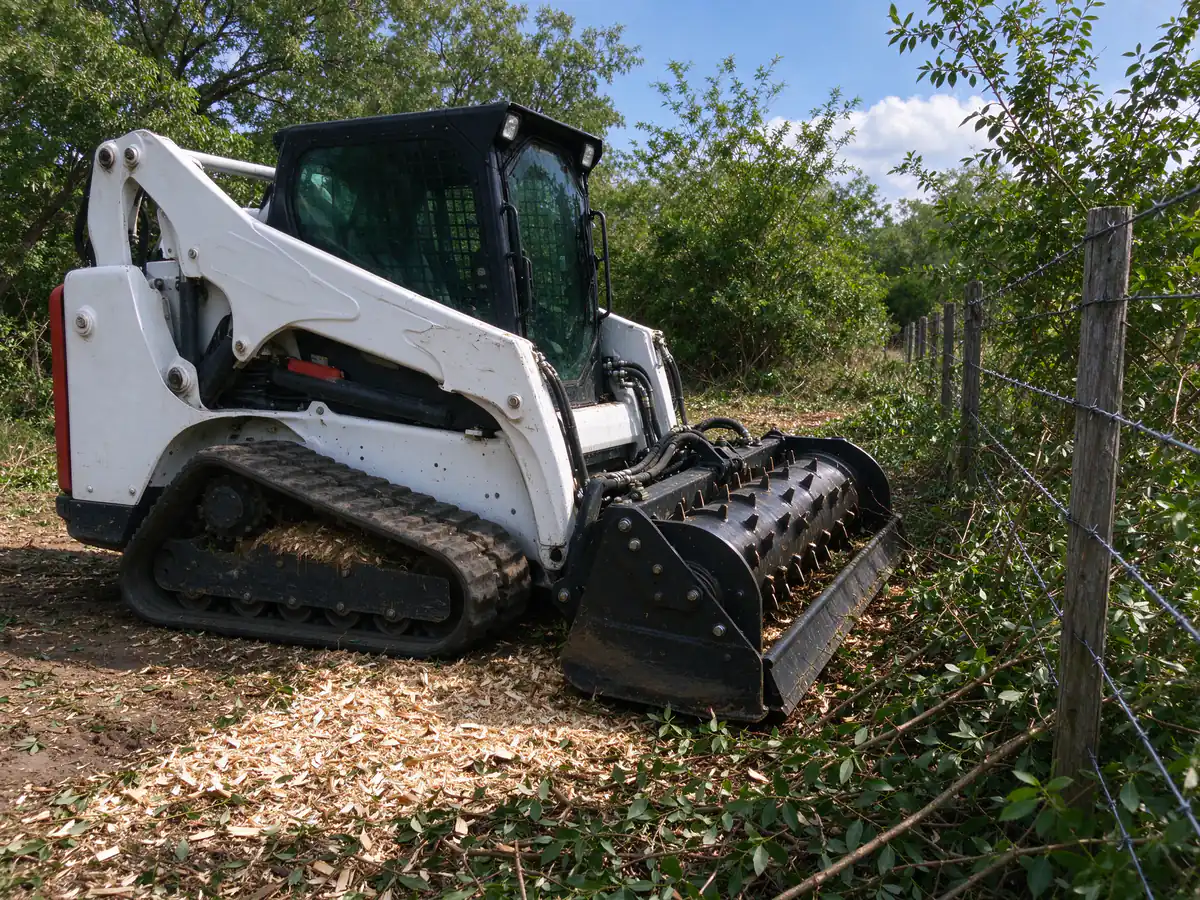
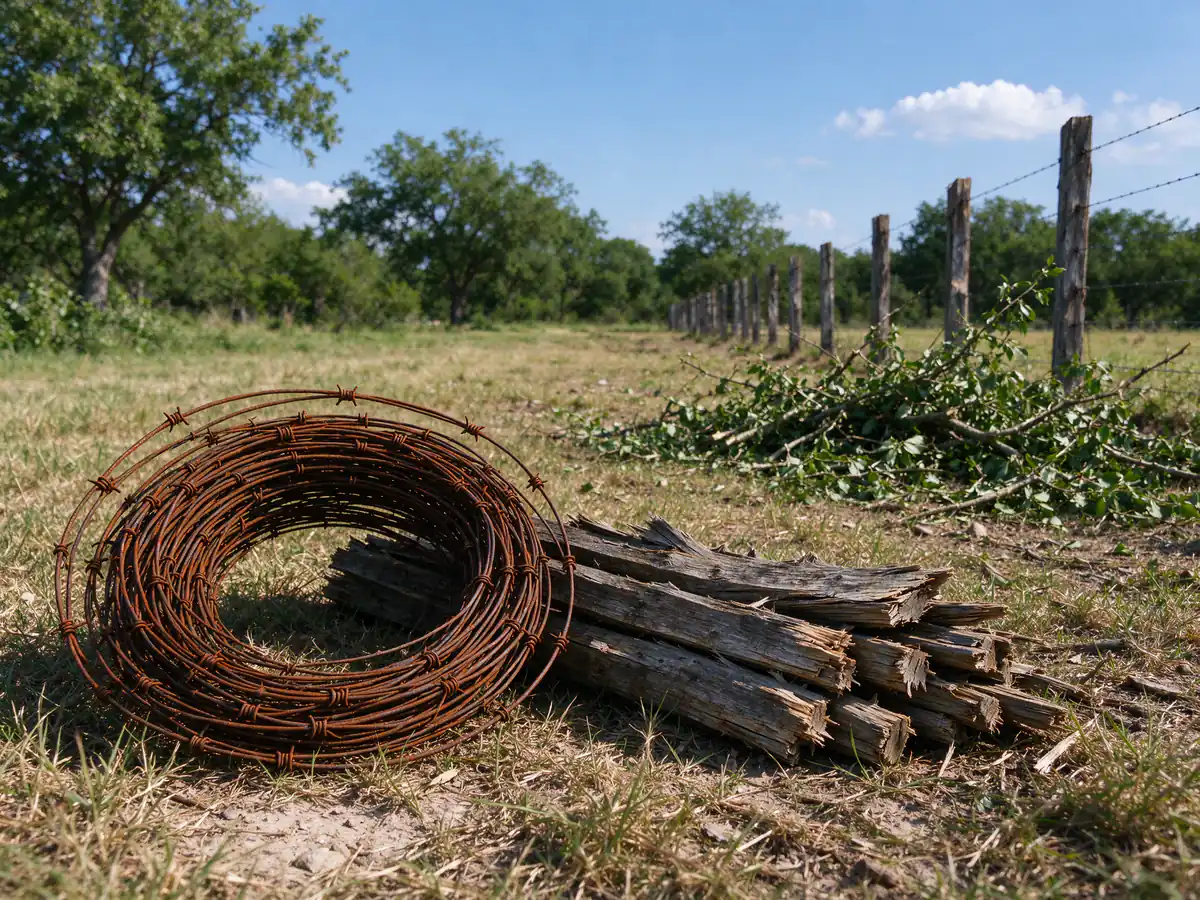
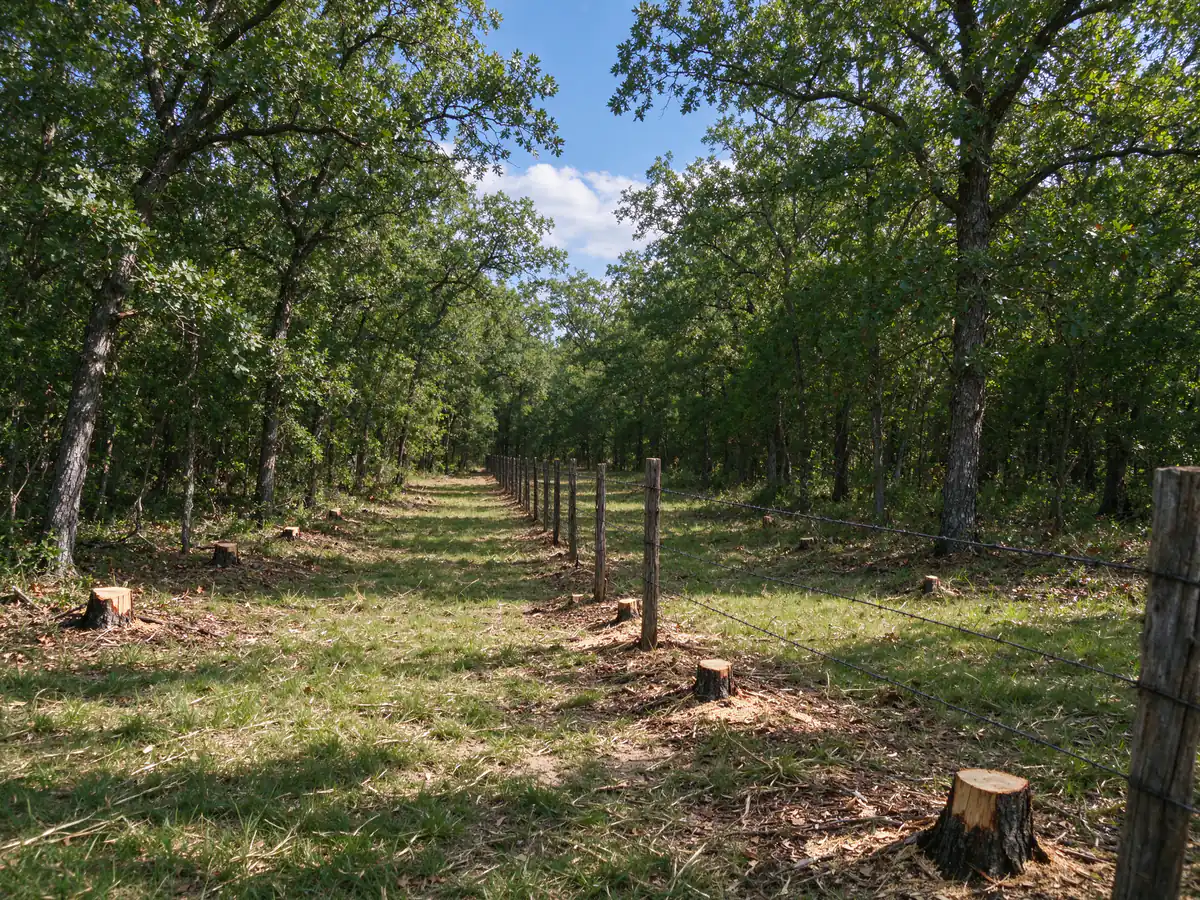
Representative photos of this type of work, not photos of specific completed jobs.