
Last Updated:
Selective land clearing takes out what you do not want and leaves what you do. On a wooded home site, that usually means the privet thicket, the greenbriar, the dead cedar and the saplings crowding the trunk of a good oak, while the oak itself and its roots come through untouched. Homestead Land Clearing offers selective clearing and underbrush removal across Frisco and the surrounding wooded acreage of Collin and Denton counties, with the work done by licensed and insured contractors. It is slower and more careful than a full clear, and that care is the service. A machine that drives over a root zone can kill a 60-year-old tree as surely as a saw, just more slowly. When the goal is open, cleared ground for a house pad, lot clearing is the better fit. When it is a cleaner, healthier woodland, read on.
What happens on the first visit
The first visit is mostly marking. Every decision about what stays is made before a machine arrives.
- Walk the property. Boundaries, the trees you want to keep, slopes, wet spots, fences, and what is buried or overhead.
- Check the rules for that address. Whether the tree permit applies, which sizes and species are protected, any creek or floodplain limits, and utility locates through Texas811.
- Write the scope. The target vegetation by name, the keeper trees, machine routes, finish level and debris plan, in writing, before a price.
- Clear and hand off. The woods are left at the agreed finish, with keepers standing and root zones intact.
Keeper trees, drip lines and machine routes
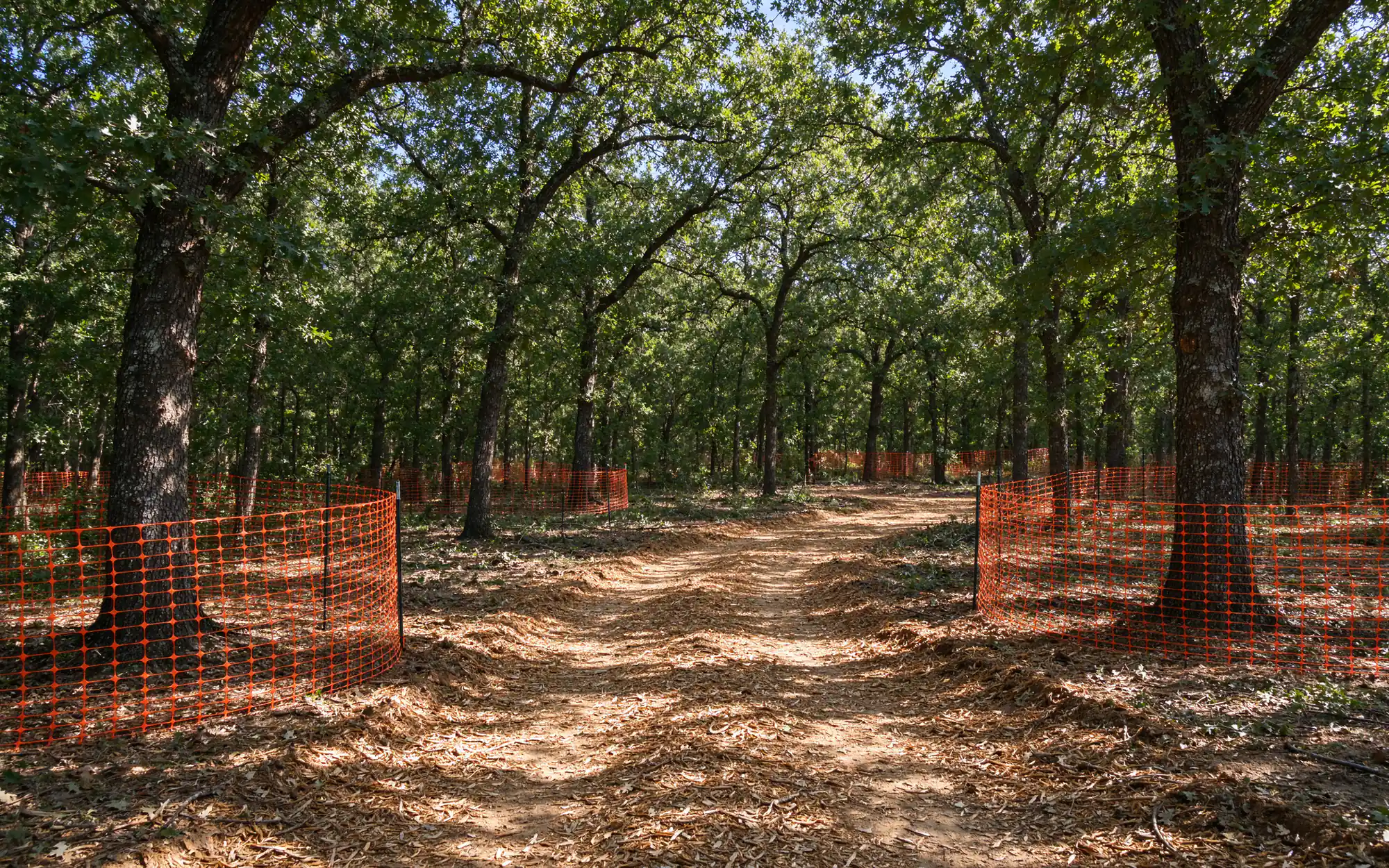
Many of a tree’s fine feeding roots sit close to the surface, and they commonly reach out past the canopy edge. Heavy equipment compacts that soil, crushes roots and tears bark low on the trunk. The damage rarely shows the same year. A keeper tree can leaf out normally for a season or two and then decline. That is why protection zones and realistic machine routes are the core of selective clearing, not an extra.
In practice that means three things. Protective fencing goes at the drip line of each keeper before work starts. Machine routes are planned to run between protection zones, often looping in from a single access point so the same path is used every time. And nothing gets stored, piled or dumped under a keeper’s canopy: no fill, no brush piles, no mulch mounded against the trunk. Frisco’s ordinance writes several of these into law for protected trees. Fill and excavation are prohibited within the drip line, root pruning is required at least two weeks before any approved disturbance under it, and brush under drip lines may be cleared only by hand or with mechanical mowers on turf tires when the City’s Landscape Architect approves.
Trees that lean toward a house, have dead tops or interlock with neighbors’ crowns are not machine work. Those may need an arborist who climbs and rigs, which is a separate trade.
Frisco protected trees and Prosper’s excluded species
The rules decide which trees you may take out at all. Frisco requires a Tree Removal Permit to remove any tree, regardless of size or species, except on single-family or two-family lots within a plat of record. A protected tree is 6 inches or more in diameter at 4.5 feet, or 4 inches in the riparian buffer, and not on the City’s excluded list. On unplatted acreage, a selective clearing scope that removes protected trees needs an approved tree survey and mitigation first. Replacement runs 100 percent of the removed inches for 6 to 12 inch trees, 150 percent for 12.1 to 20, and 300 percent above 20. Cut trees must be chipped on site or hauled off within 72 hours. The Frisco tree removal permit guide has the full process.
Prosper draws the line differently. Its code excludes silver maple, hackberry and Texas sugarberry, honey locust, bois d’arc, mimosa, mulberry, white poplar, cottonwood, mesquite and willow from protection, so those can come out without mitigation, though a Town permit is still needed off occupied platted lots. Inside the floodplain, Prosper protects any species at 6 inches and up, at higher replacement rates. The Prosper service area page and the Prosper tree ordinance changes post cover the details.
Woods along a creek need extra care everywhere. Frisco requires a grading permit or City letter before removing trees or vegetation in the floodplain or floodway, with fines up to $2,000 per offense that reach the contractor as well as the owner. Near Lewisville Lake, land at or below elevation 535 feet is generally federal property, and the U.S. Army Corps of Engineers prohibits removing vegetation there without permission. See clearing near creeks and floodplain before cutting along water.
Underbrush, privet and other invasives
Much selective work is about the understory, and Chinese privet is a frequent reason. The City of Denton runs a privet removal initiative describing dense thickets invading fields, fencerows, roadsides, forest understories and creek banks, and Dallas County lists Chinese, Japanese and glossy privet as prevalent across North Texas. Left alone, a privet thicket can turn open woods into a wall of green at eye level. The North Texas invasive brush guide covers privet, hackberry and honey locust in more depth.
Regrowth depends on the species, so the scope should name them. Texas A&M AgriLife describes eastern redcedar as a non-resprouting juniper, so a cedar cut below its lowest green limbs does not come back from the stump. Mesquite is the opposite: AgriLife notes it resprouts from a bud bank below ground, so cutting alone sets it back rather than removing it. Other species fall in between, which is why a single clearing pass is rarely the last word. Does brush grow back after clearing explains what to expect.
Poison ivy is common in shaded understory. It should never be burned: CDC NIOSH warns that smoke from burning poison ivy causes lung irritation. In any case, burning in Collin and Denton counties is tightly limited because both sit in the DFW ozone nonattainment area.
Trail clearing and wooded home sites
Trail clearing is selective work along a line. The decisions are width, overhead clearance and what happens to stumps in the path. A footpath can wind between trees and leave stumps cut low. A trail that a mower or utility vehicle will maintain needs a consistent width and stumps ground below grade. Wet spots are worth routing around on clay soils, since a trail through a low area becomes a rut within a season.
Wooded home sites often combine all of this: underbrush cleared around the house, a few non-protected trees removed for light, a path to the back of the property and good trees protected throughout. Forestry mulching suits much of that work because it leaves a mulch layer instead of bare soil, though mulch should not be mounded over keeper roots. Where the understory is mostly brush rather than trees, brush clearing may be the closer scope. The forestry mulching vs land clearing guide helps choose between methods.
What selective clearing costs
No public source publishes a per-acre rate for selective clearing, and HomeGuide notes it usually costs more per acre than a full clear because the work around keepers is slower. As national context, HomeGuide’s brush clearing tiers run $800 to $1,800 per acre for light brush, $1,600 to $3,000 for heavy brush and $2,500 to $5,000 for wooded land. For forestry mulching, HomeGuide lists $500 to $1,000 or more per acre and $125 to $300 per hour with an operator, and North Texas quotes commonly run higher than the national figure. These are budgeting ranges, not company rates.
What moves a selective job within those ranges is the number of keepers, how much has to be done by hand, how dense the privet is and where the debris goes. Compare written scopes using what a land clearing quote should include, and check that each one names the keeper trees, the routes and the debris plan.
What's included
- A walk of the property to mark every tree that stays, every tree that goes and the areas to be thinned
- A check of the tree rules for that address, including protected sizes, excluded species and floodplain limits
- A written scope naming the target vegetation, the keeper trees, machine routes, finish level and debris plan
- Protective fencing or flagging at the drip line of keeper trees
- Removal of underbrush, vines, saplings and invasive shrubs such as privet inside the agreed areas
- Removal of marked trees that are not protected, or that are covered by an approved permit
- Trail or path corridors cleared to an agreed width and overhead height
- Debris chipped, mulched in place away from root zones, or hauled off
Three selective clearing scopes and what each leaves behind
| Underbrush only | Underbrush plus invasive trees | Trail or path corridor | |
|---|---|---|---|
| What comes out | Shrubs, vines, saplings and dead wood under the canopy | The same, plus privet thickets and marked trees that are not keepers | Everything inside a set width and height along one line |
| What stays | Every established tree | Keeper trees chosen on the walk, fenced at the drip line | The woods on both sides, untouched |
| Typical tools | Hand crews, saws and light machines on turf tires near trees | Light machines on planned routes, hand work near keepers | Compact mulcher or hand crew, depending on width |
| Follow-up | Regrowth from roots and seed needs a later pass | Cut stumps of resprouting species need follow-up | Periodic mowing to keep the corridor open |
| Main risk | Equipment wandering onto root zones | Mistaking a keeper for a removal tree | Corridor routed through a wet spot or a property line |
Related resources
- LearnWhen do you need a City of Frisco tree removal permit?
- LearnWhat should you know about hackberry, privet and honey locust removal in North Texas?
- LearnCan you clear land in a floodplain or near a creek?
- LearnDoes brush grow back after clearing?
- Decision GuideForestry mulching vs land clearing: which one does your property need?
- Decision GuideWhat should a land clearing quote include?
Representative photos of this work
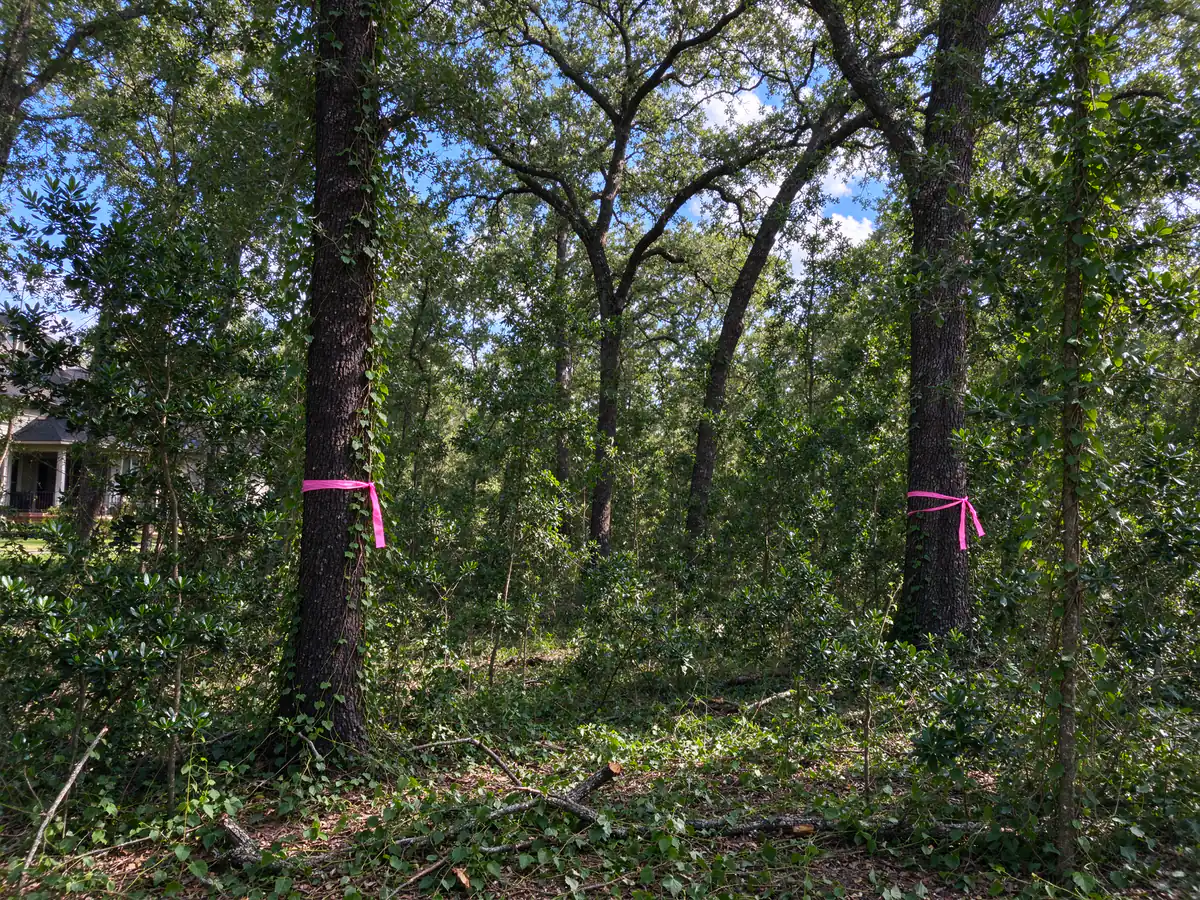
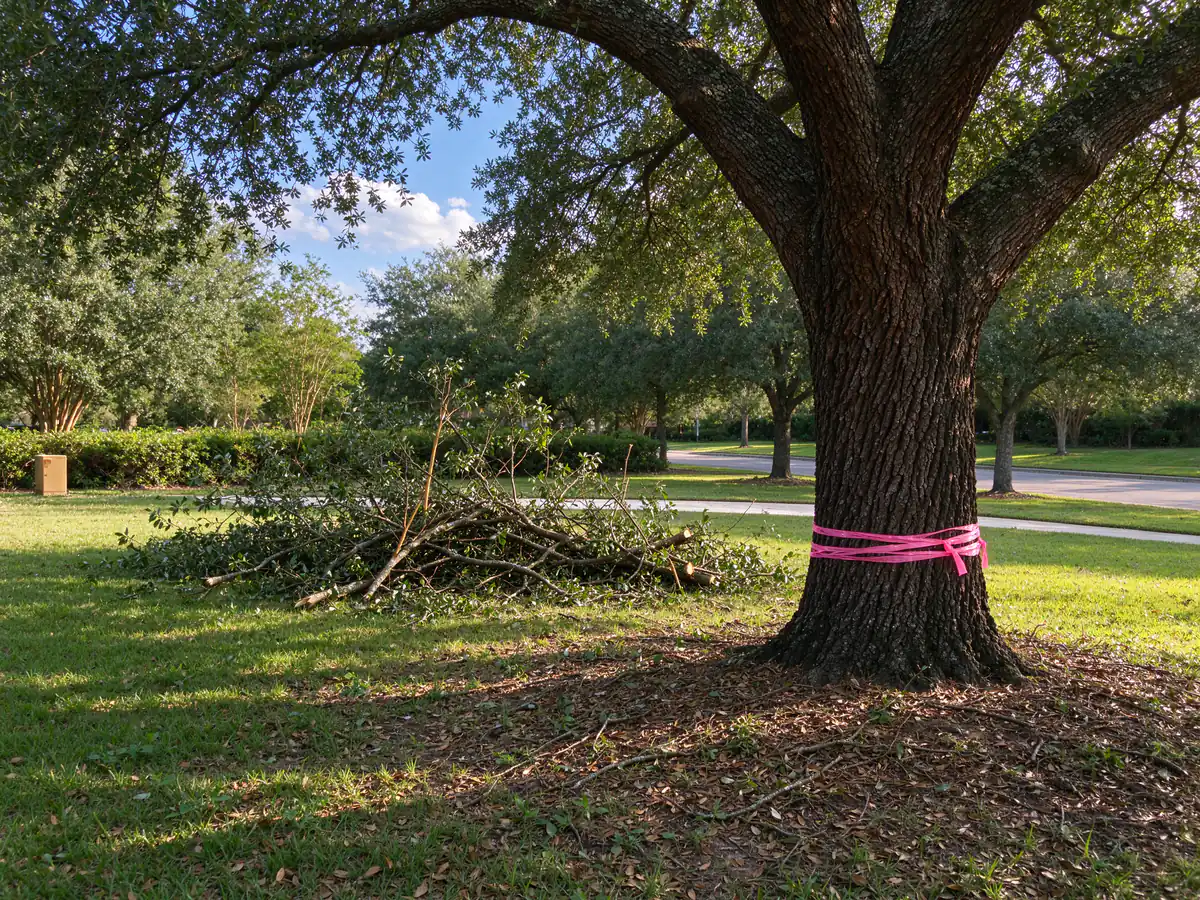
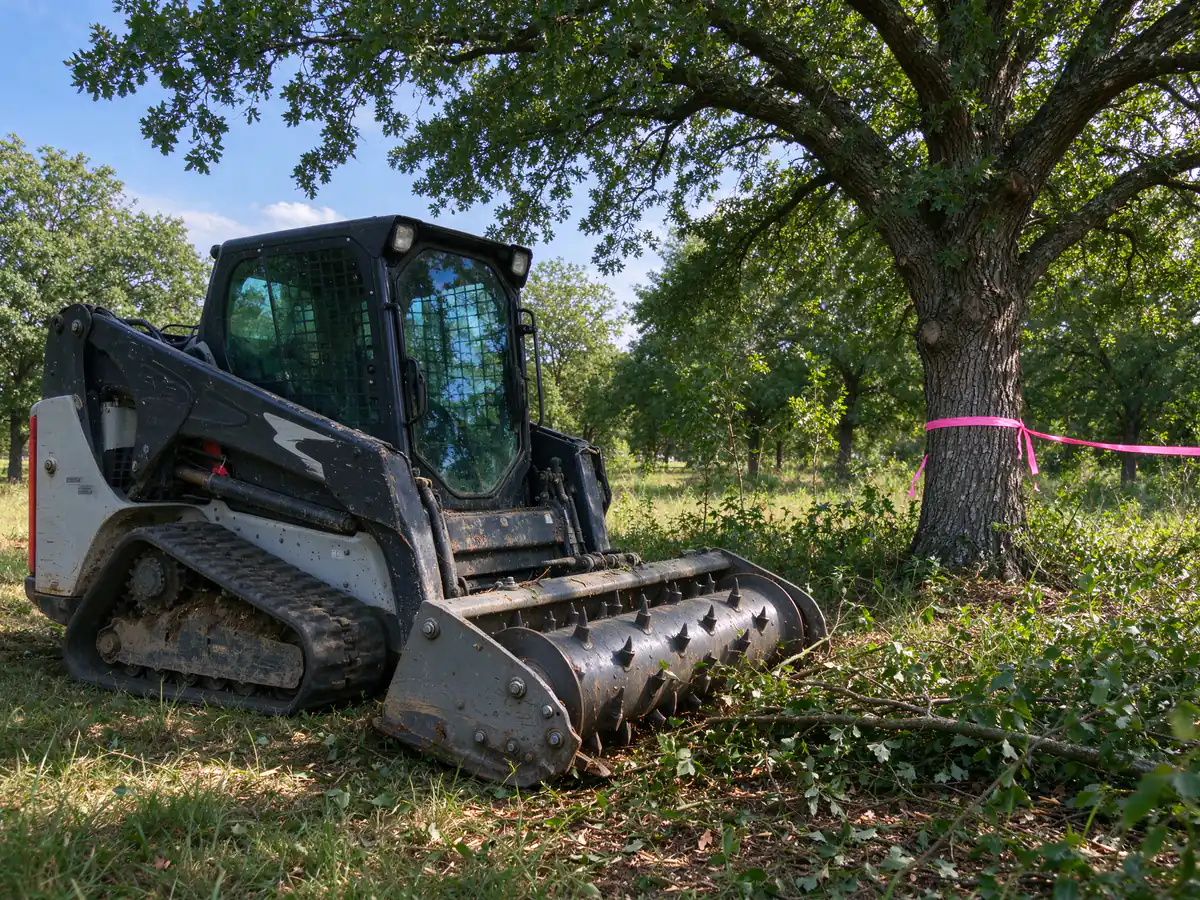
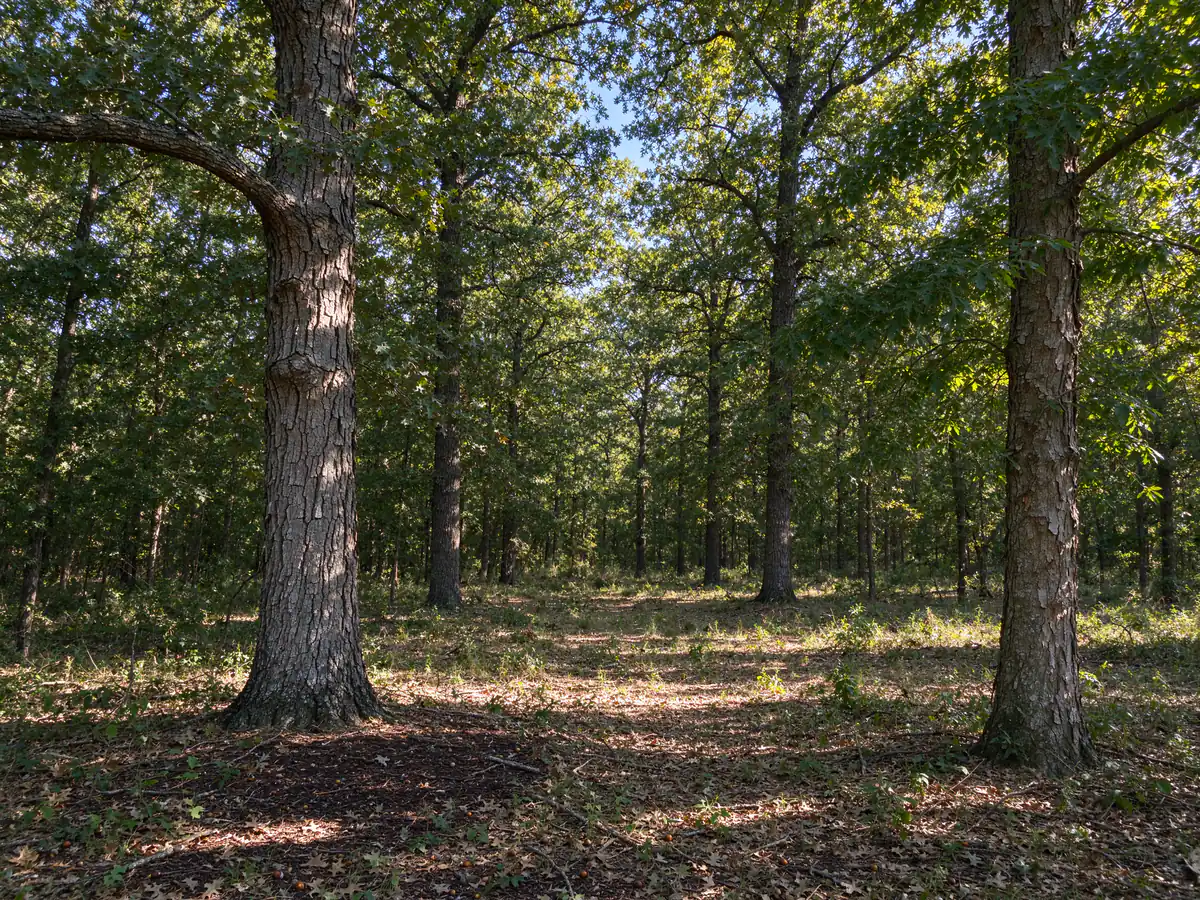
Representative photos of this type of work, not photos of specific completed jobs.